



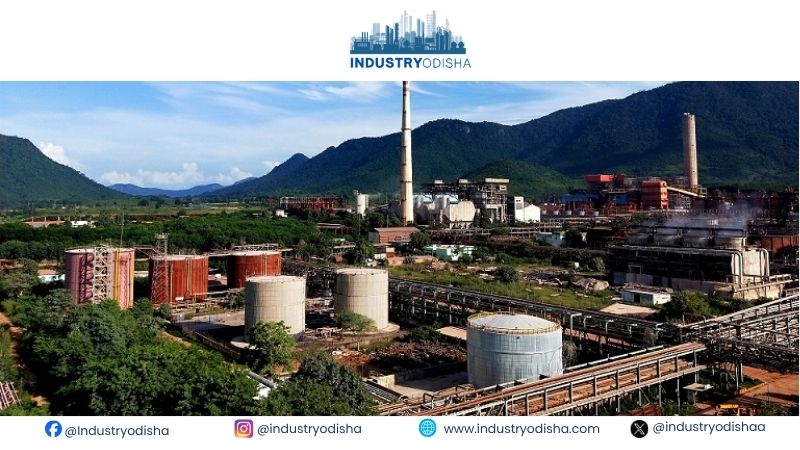
Odisha has an important position in India’s mining and metals sector, particularly in bauxite and aluminium production. The state has large mineral resources and supports several stages of the aluminium value chain, from mineral extraction to alumina refining and aluminium manufacturing.
The Sijimali bauxite block in Odisha has attracted significant industry attention because of its proposed role in supplying raw material to Vedanta’s existing alumina operations in the state. Government records show that Vedanta Ltd. was declared the successful bidder for the Sijimali bauxite block following an auction conducted under the Mines and Minerals (Development and Regulation) framework. An associated Letter of Intent was subsequently issued by the Odisha government.
The development is relevant to the wider industrial ecosystem because bauxite is the primary ore used to produce alumina, which is then processed into aluminium. The proposed mining activity therefore connects mineral resources in the Sijimali region with downstream industrial operations.
At the same time, mining projects involve land, environmental, regulatory, transportation, and community-related considerations. Government documents published during 2026 show that land acquisition and rehabilitation and resettlement processes connected with the project have been progressing through formal procedures.
Sijimali’s Role in Odisha’s Aluminium Value Chain
Bauxite mining is an important first stage in aluminium production. After extraction, bauxite is processed to produce alumina, which can then be converted into aluminium through further industrial processes.
The Sijimali project is connected to this wider production chain. According to documents considered by the Expert Appraisal Committee, the proposed mined bauxite is intended to be transported to Vedanta’s existing alumina refinery at Lanjigarh in Odisha. The submitted transportation plan involves covered trucks, railway sidings, and rail movement toward the refinery.
This connection between mining and refining can influence several areas of industrial activity:
- Raw-material availability for alumina production.
- Transportation and logistics requirements.
- Demand for road and railway infrastructure.
- Employment opportunities connected with mining and related services.
- Business opportunities for contractors and suppliers.
- Supporting activity in nearby towns and communities.
- Integration between upstream mining and downstream processing.
The project is therefore not simply a mining development. Its progress is connected with a broader industrial supply chain.
The planned transportation system is also an important part of the project. Environmental assessment documents indicate that crushed bauxite is proposed to move through covered trucks to railway sidings at Leliguma and Tikiri before being transported by rail to the Lanjigarh refinery.
Such a system requires coordination between mining operations, roads, railway facilities, loading points, and the refinery. Efficient logistics can influence the cost and reliability of moving raw materials.
The project documents also include traffic assessments for roads in the surrounding area. The assessment considered existing and projected traffic conditions at several locations, including state highways and village roads.
For an industrial project of this type, transport planning is important because increased movement of heavy vehicles can affect local roads and traffic conditions. Infrastructure improvements and appropriate mitigation measures therefore form part of the broader development process.
Land, Regulation and Community Processes
Large mining projects require several approvals and legal processes before commercial operations can proceed. These can include mining approvals, environmental clearances, forest-related permissions where applicable, land acquisition procedures, rehabilitation and resettlement measures, and infrastructure planning.
In the case of Sijimali, government records show that rehabilitation and resettlement procedures have been formally documented. The Kalahandi district administration published an approved R&R scheme for Tijamali village relating to land acquisition connected with the Sijimali bauxite mines. The document was listed from February 4 to March 31, 2026.
A separate government notification also records a declaration concerning acquisition of private land in Tijamali village for the operation of the Sijimali bauxite mines by Vedanta Ltd.
These documents demonstrate that land-related processes are an important part of the project’s development.
The broader Sijimali discussion has also included community and environmental concerns. Reporting by BBC News India in June 2026 described opposition from some tribal residents who expressed concerns about land, forests, water sources, and livelihoods. Vedanta told the BBC that mining would not affect flowing streams or groundwater and would have limited environmental impact.
These positions represent different perspectives surrounding the project and should be considered separately from the formal government approvals and technical assessments.
For the industry, responsible project development involves addressing regulatory requirements while maintaining clear communication with affected communities and other stakeholders.
Key areas that remain relevant include:
- Land acquisition and rehabilitation.
- Environmental management.
- Forest-related compliance.
- Water resource management.
- Road and transport infrastructure.
- Worker safety.
- Community engagement.
- Monitoring and reporting.
- Mine closure planning.
The environmental assessment process has also examined the proposed mining plan and transportation arrangements. According to the Expert Appraisal Committee document, the mining plan was approved by the Indian Bureau of Mines in 2023, while a modified mining plan covering revised forest areas and a mine closure plan was approved in December 2025.
These stages show why large-scale mining projects normally develop over several years rather than moving directly from auction to production.
Industrial Outlook and Conclusion
The development of Vedanta Sijimali is closely connected with Odisha’s wider position in the aluminium and mining industry. The project has the potential to become part of the raw-material supply chain supporting alumina production in the state, subject to the completion of applicable approvals, land processes, infrastructure development, and other regulatory requirements.
Odisha’s importance to the aluminium sector also extends beyond individual mining blocks. The state has established industrial infrastructure supporting mining, refining, smelting, transportation, and downstream manufacturing.
The wider aluminium industry is expected to remain important for sectors such as construction, transportation, electrical equipment, renewable energy, packaging, and infrastructure. This creates continued demand for reliable raw-material supply and efficient industrial logistics.
The Sijimali project is therefore relevant from several industry perspectives:
- It is connected to Odisha’s bauxite resources.
- Its proposed output is linked with an existing alumina refinery.
- It requires road and rail transportation infrastructure.
- It involves land acquisition and rehabilitation processes.
- It is subject to environmental and mining regulations.
- Its development can affect local businesses and employment.
- Its progress is relevant to Odisha’s broader mineral-based industrial economy.
At the same time, the project’s development needs to be understood through documented approvals, government records, technical assessments, and verified reporting rather than assumptions about future production.
The future progress of the project will depend on the completion of the required regulatory and development stages. Continued attention to environmental safeguards, infrastructure planning, worker safety, land processes, and community engagement will remain important as the project moves through its development cycle.
For Odisha’s industrial sector, Sijimali represents one part of a larger story involving mineral resources, aluminium production, infrastructure, logistics, and regional economic activity. Tracking the project through official notifications and regulatory documents provides a clearer picture of its actual progress and its place within the state’s evolving industrial landscape.
