



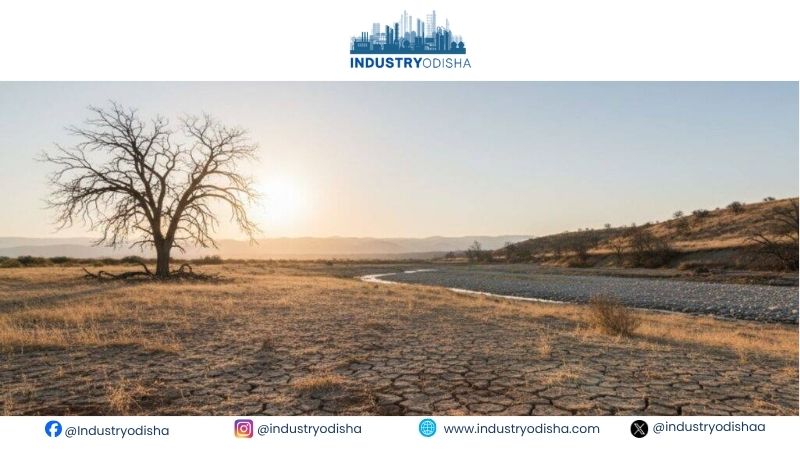
Industry Odisha Bureau, Sep 18: El Niño has put India on track for its driest monsoon since 2009. Seasonal rainfall remains sharply below the long term average. The deficit is threatening crops and raising food inflation risks. India’s monsoon performance has weakened significantly during the current season.
Rainfall Deficit Deepens
Cumulative monsoon rainfall is around 15% below normal. That puts India on track for a severe seasonal shortfall. The 2009 monsoon ended nearly 18% below normal. Current conditions could make 2026 the driest season in 17 years.
El Niño Drives Rainfall Weakness
A strengthening El Niño has curtailed rainfall across several regions. The weather pattern has disrupted the normal monsoon circulation. Late season showers may help some eastern areas. However, they are unlikely to reverse the national deficit.
Crop Risks Rise
Weak monsoon rainfall threatens current kharif crop yields. Rice, sugarcane, and corn remain particularly exposed. Lower rainfall can reduce irrigation availability across rain fed regions. Farmers may also face pressure during the next sowing cycle.
Food Inflation Becomes Key Concern
A driest monsoon scenario could intensify food price pressures. Food inflation has already accelerated during recent months. Lower crop output could tighten supplies further. That may push prices higher across essential food categories.
Rural Demand Could Feel Impact
A weak monsoon can reduce farm income and rural spending. That affects demand for motorcycles, tractors, and consumer goods. India’s broader consumption recovery could therefore face some pressure. The impact will depend on crop losses and government support.
Government Moves to Protect Supplies
Authorities are already taking steps to manage food availability. Imports and buffer stocks can help limit supply shortages. Subsidised sales may also ease pressure on selected commodities. However, policy support cannot fully replace deficient rainfall.
RBI Faces Another Inflation Risk
Higher food prices could complicate monetary policy. The RBI is already watching broader inflation pressures closely. A driest monsoon outcome would add another domestic risk. That could reduce room for monetary easing.
India Nears Critical Monsoon Finish
The monsoon season is approaching its final weeks. India remains on track for a significant rainfall deficit. El Niño continues to influence the broader weather pattern. For agriculture, the coming weeks remain critical. For the economy, food inflation is the bigger concern. India’s driest monsoon risk is now becoming a macroeconomic challenge.
