



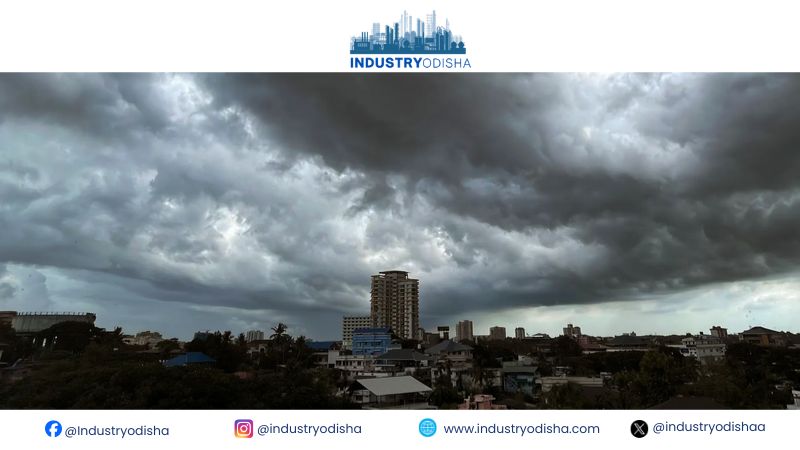
Industry Odisha Bureau, Sep 08: India’s monsoon season is nearing its final weeks. Rainfall currently sits 14% below its Long Period Average (LPA). The IMD expects little improvement before the season ends.
That gap may not close significantly going forward. IMD projections point toward continued weak rainfall. A full seasonal recovery now appears unlikely. The overall deficit could exceed 10% this year. That would mark the first such shortfall since 2015. The final figure, though, remains unconfirmed until season’s end.
A deficit this size carries wider implications. Agricultural production could face added pressure. Reservoir levels and drinking-water availability may also be affected. El Niño conditions add further uncertainty to the picture. Scientists expect this event to strengthen considerably. Its effects could extend toward the March-May 2027 period. El Niño does not guarantee any single outcome. It influences weather patterns without determining every event. Even so, its strengthening raises the stakes for planning.
Spring and summer 2027 could run hotter than 2024. That outlook remains a projection, not a certainty. It nonetheless adds urgency to early preparedness work. National rainfall figures, though, tell only part of the story. Bihar illustrates that gap sharply this season. The state carries roughly a 35% monsoon deficit.
Yet large parts of Bihar face severe flooding simultaneously. Areas south of the Ganga have been hit hardest. Flooding has damaged both crops and property there. Normally, Bihar’s flood risk concentrates in its north. Rivers from Nepal and the Himalayas usually drive that flooding. This episode instead came from rain-fed central Indian rivers.
The contradiction is not really a contradiction at all. A statewide deficit can still include intense localised rainfall. Timing, geography and intensity all shape outcomes differently. Rainfall variability of this kind has grown over time. A season can post normal totals overall. Its distribution can still cause serious localised damage.
That gap between headline numbers and ground reality matters. Preparedness built only around cumulative rainfall risks missing local extremes. Planning needs to account for distribution, not just totals.
Meeting these risks requires coordination across sectors and governments. Agriculture, water management and disaster response all intersect here. Central and state governments both hold relevant responsibilities.
India’s challenge heading into 2027 is therefore twofold. It must prepare for a season running dry overall. It must also prepare for sudden, uneven flooding within that dryness.
