



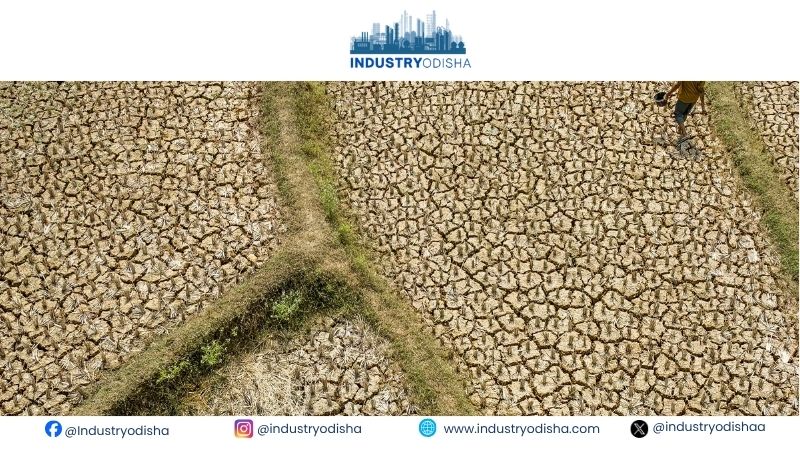
Industry Odisha Bureau, Sep 23: An intensifying El Niño threatens drought across Asia’s key farming regions. Rice and palm oil supplies are exposed. Analysts warn the fallout could end up raising global food prices.
Asia’s weather is becoming a global food-market story. A strengthening El Niño is building over the Pacific Ocean. Experts expect it to be exceptionally strong. That puts rice and palm oil, two staples of global trade, under pressure.
The stakes stretch well beyond Asian agriculture. Goldman Sachs analysts estimate food commodity prices could rise by more than 15%.
How El Niño turns rainfall risk into food risk
El Niño is a natural climate cycle. It warms Pacific Ocean surface temperatures beyond normal levels. Those warmer waters can reshape weather patterns across continents.
This year’s event is forecast to peak in December. NOAA sees a 69% chance it will be the strongest since records began in 1950. That is a probability, not a certainty.
Southeast Asia is among the world’s most climate-vulnerable regions. When rainfall falls short, farmers may delay planting, cut acreage or switch crops. Kareff Rafisura of UN ESCAP put it plainly: “Agriculture is definitely on the front line.”
Rice exporters India, Vietnam and Thailand exposed
India, Vietnam and Thailand are the world’s three largest rice exporters. All three are among nations most likely to be hit hard this year.
Weaker rains strain irrigation, complicate planting and threaten rice production. Any shortfall in these countries could ripple through export markets. The scale of any impact remains uncertain. In Thailand, some farmers already pump water into fields rather than trust the rain.
Palm oil faces another weather test
Indonesia and Malaysia supply about 85% of the world’s palm oil. Rain matters for fertilising oil palms in Indonesia. It helps dissolve fertiliser into soil without burning the plants.
Eddy Martono of the Indonesian Palm Oil Association warned growers may stop fertilising without rain. He said that would hurt national output.
Malaysia expects the strongest impact in November. Its prime minister has ordered the agriculture ministry to find mitigation measures.
Water stress hits reservoirs, forests and fisheries
Indonesia already shows the early strain. Wildfires are burning through forests and peatlands, releasing toxic haze. A key reservoir serving Jakarta, a city of 42 million, keeps dropping. Ruins of one of 11 villages once flooded by it have resurfaced.
Fisheries, a vital protein source, face lower rainfall and hotter temperatures. Along the Mekong, communities rely on predictable water levels for fishing and farming. That river was already under pressure from mining and hydropower dam construction. El Niño adds to those strains rather than creating them.
Food security risks extend beyond Asia
The World Food Programme warns of wider hunger risks. It says at least 49 million more people could face acute food insecurity by end-2027. Central America and southern Africa could be worst affected. Eastern Africa, South Asia and Southeast Asia also face significant effects.
Global food prices could feel the pressure
HSBC Global Investment Research notes past El Niño losses reached trillions of dollars. It warns this episode’s costs could be larger still.
Goldman Sachs’ above-15% estimate refers to food commodity prices. That is not the same as retail food inflation.
Much will depend on how well Asian producers protect output. Until harvest outcomes are clearer, the risk to food prices remains open.
