



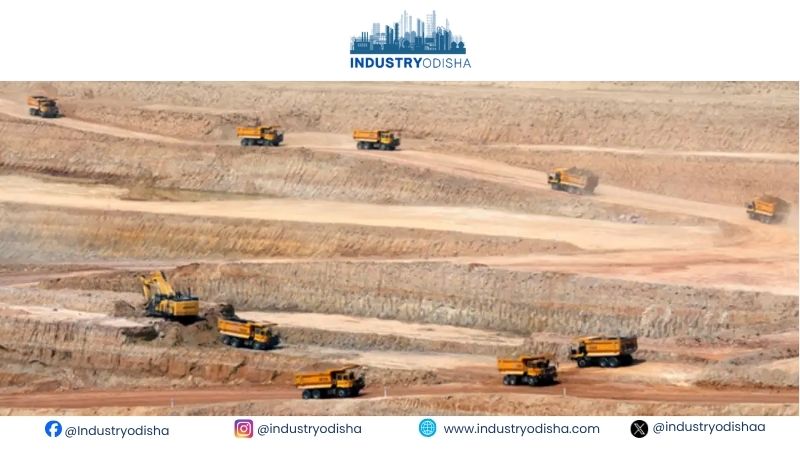
Odisha remains an important centre for India’s mining and metals industry. Bauxite, iron ore, coal, and other minerals support a large network of mining, processing, manufacturing, transportation, and supporting businesses across the state.
Kodingamali is part of this broader mineral economy. However, it is important to distinguish the operator from other bauxite projects in Odisha. Official records from the Odisha State Pollution Control Board identify the Kodingamali Bauxite Mine as a project of Odisha Mining Corporation Ltd. (OMC), with the mine located in the Kodingamali area under Laxmipur and Kashipur tehsils. In 2026, OMC proposed expanding bauxite production capacity from 3.6 million tonnes per annum to 6 million tonnes per annum.
This distinction matters for industry readers because Odisha’s bauxite sector includes projects operated or developed by different organizations. Vedanta, meanwhile, has separately secured several bauxite blocks in the state as part of its aluminium raw-material strategy. Understanding these projects individually gives businesses and readers a clearer view of Odisha’s mining landscape.
Bauxite Remains Important to Odisha’s Industrial Chain
Bauxite is the main ore used to produce aluminium. The industrial process generally involves converting bauxite into alumina and then processing alumina into aluminium. This creates a connected supply chain involving mines, refineries, smelters, power facilities, logistics, and downstream manufacturing.
The Odisha State Pollution Control Board’s 2026 public-hearing records show that the Kodingamali project involves a proposed increase from 3.6 MTPA to 6.0 MTPA of run-of-mine bauxite production. The proposal also includes overburden and waste handling, topsoil management, and a total excavation figure of 9.51 MTPA.
Such expansion can have implications beyond the mining operation itself. Higher production capacity may increase demand for transportation, equipment, maintenance, environmental monitoring, and other supporting services.
The wider bauxite-to-aluminium chain includes:
- Mineral exploration and mining
- Ore handling and transportation
- Crushing and screening
- Alumina refining
- Aluminium smelting
- Power generation
- Logistics and warehousing
- Downstream manufacturing
- Equipment and maintenance services
For industrial businesses, these connections are significant because mining activity can create demand across multiple sectors. Engineering companies, transport operators, equipment suppliers, contractors, and service providers can all form part of the wider industrial ecosystem.
At the same time, production growth depends on regulatory permissions, infrastructure, market conditions, environmental requirements, and operational capacity. A proposed expansion should therefore not automatically be treated as completed production.
The Kodingamali example demonstrates how mineral projects can become part of a larger industrial strategy while remaining subject to separate regulatory and operational processes.
Infrastructure and Regulatory Processes Shape Mining Growth
Mining is not simply a matter of extracting minerals. Large-scale projects require roads, transport systems, power, water management, equipment, workers, safety arrangements, and environmental controls.
The Kodingamali public-hearing process illustrates the regulatory side of mineral development. Odisha’s pollution-control authority listed public hearings in June 2026 concerning the proposed production expansion. The hearings were held in locations associated with the affected areas of Koraput and Rayagada districts.
Public hearings form part of the environmental assessment process for qualifying projects. They provide a formal setting for local stakeholders to raise issues and submit views concerning proposed developments.
Odisha’s regulatory framework also classifies bauxite mining as a Category A mining activity for consent-related purposes. The Odisha State Pollution Control Board states that coal, bauxite, iron ore, manganese, limestone, dolomite, and chromite mines fall under the Category A classification.
This means industrial mining projects must account for environmental compliance alongside production planning.
Businesses operating around mining areas also need to consider practical infrastructure requirements. These may include:
- Heavy vehicle movement
- Road maintenance
- Mineral transportation
- Equipment servicing
- Worker accommodation
- Safety services
- Waste management
- Environmental monitoring
- Technical consulting
Better infrastructure can support industrial efficiency, but development also needs to consider local communities and environmental conditions. Mining areas can include agricultural land, forests, settlements, and water resources, making planning an important part of project development.
For companies considering investment or expansion in mining-related services, understanding the regulatory timeline can be as important as understanding the mineral opportunity itself.
Vedanta’s Bauxite Strategy Has a Wider Odisha Connection
The term Vedanta Kodingamali may appear in online searches because Vedanta has an expanding presence in Odisha’s aluminium and bauxite industry. However, available official Odisha records identify Kodingamali as an Odisha Mining Corporation project, rather than a Vedanta-operated mine.
Vedanta has separately been developing its bauxite resource base in Odisha. In March 2026, Vedanta was declared the preferred bidder for the Karnapodikonda bauxite block in Koraput following an e-auction conducted by the Directorate of Mines and Geology, Government of Odisha. The company stated that the block covers 532.747 hectares and would support raw-material security for its aluminium business.
The company’s broader strategy is based on greater integration between mineral resources and aluminium production. Vedanta states that its bauxite mines are intended to support alumina refineries, aluminium smelters, and related power operations.
This strategy is relevant to Odisha because the state already hosts major aluminium-related facilities. Vedanta reports that its operations include the Lanjigarh alumina refinery and Jharsuguda aluminium operations. The company also announced further expansion plans in the state during 2026.
The distinction between Kodingamali and Vedanta’s separately secured blocks is therefore important. Odisha’s mining industry contains multiple projects, operators, and supply chains, and each project needs to be assessed according to its own ownership, capacity, approvals, and development status.
For industry observers, this broader view provides a more accurate understanding of how mineral resources support manufacturing.
Local Economic Activity and Responsible Industrial Development
Mining projects can generate economic activity through direct employment and through businesses that provide goods and services. The effects can extend to transportation, construction, equipment maintenance, food services, technical work, and other local activities.
However, economic activity should be considered alongside environmental and community responsibilities. Mining changes land use and can affect local ecosystems and resources. Regulatory systems therefore require project developers to address environmental management and related concerns.
The Kodingamali expansion process provides an example of this balance. The proposed capacity increase is being considered through the relevant environmental and public-hearing framework rather than simply becoming operational after an industrial announcement.
For local businesses, the industrial ecosystem can provide opportunities in areas such as:
- Vehicle and machinery maintenance
- Civil construction
- Logistics
- Technical services
- Environmental consultancy
- Safety equipment
- Skilled workforce training
- Hospitality and local services
Skill development can also become relevant as mining and manufacturing become more technology-driven. Modern industrial operations increasingly require technicians, engineers, equipment operators, environmental specialists, data professionals, and safety personnel.
Vedanta has reported initiatives focused on industry-related skills in Odisha and Chhattisgarh. In August 2026, the company said its Project Panchhi had provided industry learning and mentorship to more than 180 girls across more than 30 business functions.
These types of programmes illustrate the wider relationship between industrial investment and workforce development, although their scale and long-term effects need to be assessed separately from the production performance of individual mines.
Conclusion
Odisha’s mining industry continues to play an important role in the state’s manufacturing and industrial economy. Bauxite is particularly relevant because it forms the starting point for aluminium production, linking mining with refining, smelting, power, logistics, and downstream industries.
Kodingamali is currently identified in official Odisha records as an Odisha Mining Corporation project, with a 2026 proposal to increase bauxite production capacity from 3.6 MTPA to 6.0 MTPA.
Vedanta’s separate bauxite developments show another part of Odisha’s changing aluminium landscape. The company’s acquisition of additional mineral blocks and expansion plans indicate a focus on securing raw materials for its integrated aluminium operations.
For businesses and industry observers, the key point is that mining development involves much more than mineral production. Infrastructure, regulation, environmental management, skilled workers, logistics, and local economic participation all influence the progress of industrial projects.
A clear understanding of individual project ownership and development status can help readers, businesses, and investors follow Odisha’s evolving mining and metals sector with greater accuracy.
