



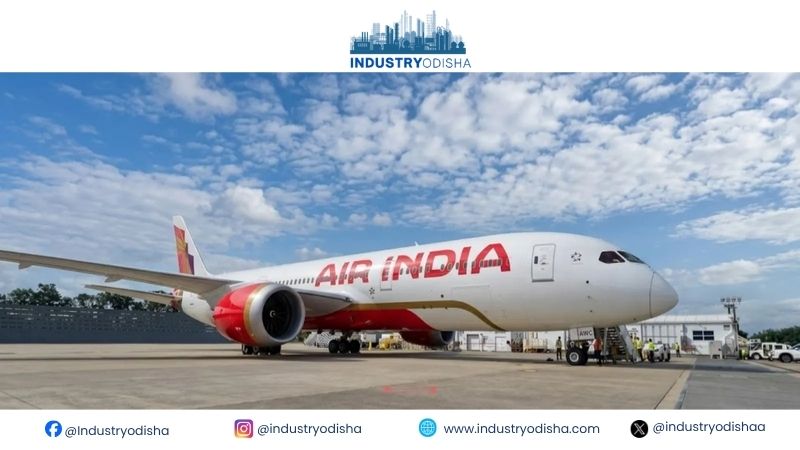
Industry Odisha, Aug 30: Temasek has backed Singapore Airlines’ investment in Air India from a long-term perspective. The backing comes despite Air India’s steep losses and a complex transformation underway. Singapore Airlines holds 25.1% of Air India, with Tata Sons owning the rest. The support reflects confidence in India’s aviation market despite near-term financial pressure.
Tata Sons controls 74.9% of the carrier, acquired from New Delhi in January 2022. Temasek’s exposure comes indirectly, through its position as a major SIA shareholder. Temasek said it views SIA’s decision from a long-term strategic perspective throughout. Singapore Airlines has explained its interest in Air India as a second-hub strategy. India ranks as the world’s third-largest air transport market, behind only two nations. SIA has operated in India for years, including through Vistara since 2013.
Air India’s loss exceeded SGD 3.56 billion for the year ended March 2026. That figure translates to more than ₹26,700 crore at the referenced exchange rate. Airspace curbs and other operational headwinds contributed to the carrier’s financial strain. Singapore Airlines Group’s own net profit fell 57% over the same period. Profit dropped to SGD 1.184 billion, equivalent to roughly ₹8,900 crore locally. The decline stemmed partly from a prior-year accounting gain tied to Vistara.
Sources have said Air India is now seeking near $1.5 billion more. That sum equals more than ₹14,000 crore at the current exchange rate cited. Singapore Airlines said on August 27 its board would weigh any such request. The board will consider its own capital needs and Air India’s strategy. No funding has been approved, and the amount remains only a reported figure.
Tata Sons chairman N Chandrasekaran has framed the turnaround in longer terms. He described Air India’s transformation as a five-to-ten-year journey, requiring sustained change. Legacy systems, workforce culture and fleet renewal all require sustained structural change. Years-long supply-chain disruptions have further complicated the carrier’s overall operational recovery efforts. Temasek acknowledged that transformation of this scale rarely proceeds along a straight path. It cited aircraft innovation, fuel-price swings and geopolitical shifts as added variables.
Member of Parliament Kenneth Tiong Boon Kiat has publicly questioned the arrangement. He noted Temasek’s dominant stake in SIA links it to Air India’s fortunes. He has filed a parliamentary question for Singapore’s transport minister on the matter. That question is scheduled for Parliament’s sitting on September 8 this year. It asks whether the losses affect SIA’s essential transport-service obligations under law.
India offers Singapore Airlines genuine long-term growth potential within a vast market. Yet Air India’s turnaround still carries real execution, capital and political risk.
