



Industry Odisha Bureau, Aug 27: Lloyds Metals’ surging iron ore production is reshaping its steelmaking strategy. The company is evaluating a substantially larger steel plant at Konsari, Maharashtra. Potential capacity could reach 8 million tonnes annually. This marks a significant step toward vertical integration and downstream value creation.
The original plan envisioned a 3 mtpa facility at the site. Environmental clearance was granted for 4.5 mtpa last year. Management is now studying whether even larger scale makes commercial sense. Final board approval remains pending on the eventual capacity decision.
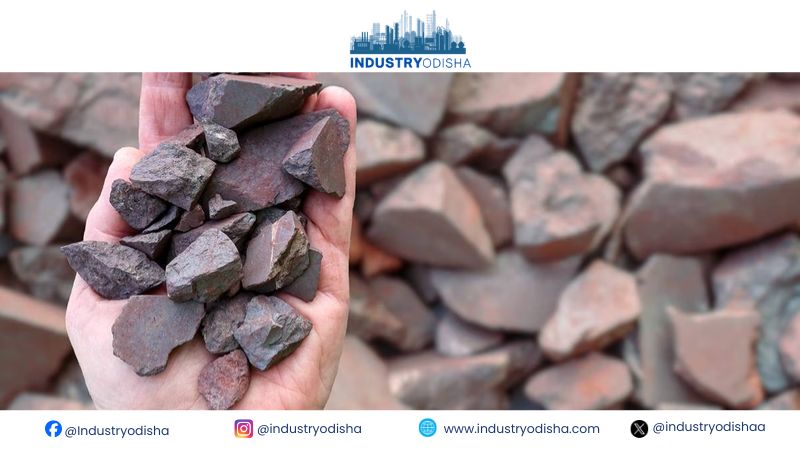
Iron ore production reached 21.96 million tonnes in fiscal 2026. Output is expected to hit approximately 26 million tonnes this year. This expanding raw-material base provides greater opportunity for downstream steelmaking integration. Rising production translates into increased capacity for supporting integrated steel operations.
Lloyds is executing a 1.2 mtpa electric-arc-furnace wire-rod plant at Ghugus. The facility is expected to commission by March 2027. This represents the company’s entry into steelmaking operations. Konsari would represent a much larger and more ambitious steelmaking commitment once approved.
By fiscal 2028, Lloyds expects to consume 2.4 million tonnes of captive ore internally. The proposed steel plant would require an additional 1.4 million tonnes. Captive raw materials significantly reduce exposure to commodity market fluctuations. This cost advantage makes integrated steelmaking increasingly attractive for the company.
June quarter iron ore production climbed 53% to 6.05 million tonnes. Sales increased 58% to reach 5.46 million tonnes. Pellet production surged to 1.69 million tonnes. The second pellet plant achieved full utilisation within four months.
Lloyds has reduced logistics costs through its proprietary slurry pipeline system. Transportation expenses declined by ₹500-550 per tonne. Lower logistics costs enhance competitiveness for downstream steel production. This operational efficiency supports the economics of larger integrated facilities.
Both Ghugus and Konsari steel projects are expected to require ₹20,000-25,000 crore. This investment would be deployed over five years. Near-term spending on ongoing projects is estimated at ₹11,000–11,500 crore. Capital intensity will rise substantially as steel production begins.
First-quarter revenue reached ₹7,354.4 crore, marking a threefold increase year-on-year. Net profit surged to ₹1,726.59 crore from ₹651.86 crore previously. Strong financial performance provides capital backing for expansion plans. Market confidence in India’s steelmaking opportunity appears robust.
The Konsari expansion reflects Lloyds’ confidence in downstream integration economics. Vertical integration of iron ore into steelmaking represents strategic evolution. The final capacity decision will hinge on technical and commercial studies. The initiative underscores India’s growing emphasis on mineral value addition.
