



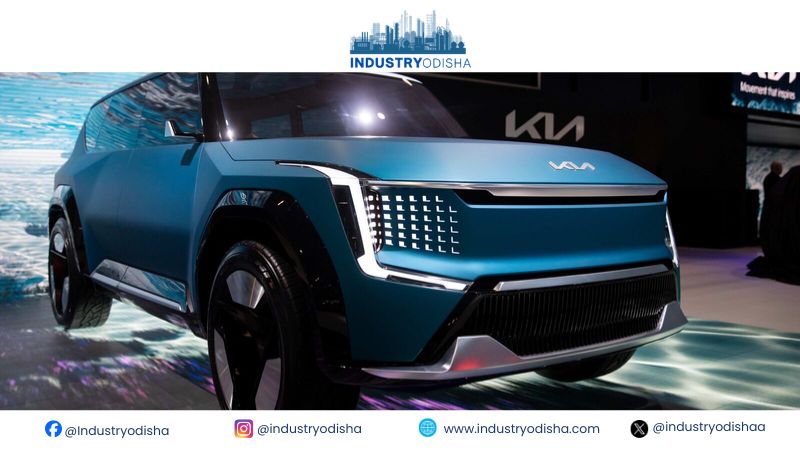
Industry Odisha Bureau, Sep 05: Kia India is expanding across multiple powertrains simultaneously this year. EVs, hybrids and CNG models form its core strategy. Indian consumer preferences remain difficult to predict accurately. Electrification remains Kia’s long-term direction despite this uncertainty. Affordability will influence how quickly adoption spreads nationally.
Managing director Gwanggu Lee said electrification represents the main wave. However, timing and adoption speed remain genuinely uncertain factors. India differs sharply from Europe’s rapid EV prominence pattern. It also differs from America’s stronger hybrid-vehicle traction trend.
CNG has emerged as India’s second-largest powertrain segment currently. It now accounts for more than 20% of sales. This growth caught Kia somewhat off guard initially. Such shifts illustrate rapidly changing consumer preferences across India’s market.
Kia recently introduced the Sorento, its first three-row SUV. This model seats up to seven passengers comfortably. It comes with hybrid petrol and diesel powertrain options. Pricing ranges from ₹27.99 lakh to ₹40.4 lakh depending on variant.
Kia expects the Sorento hybrid to drive over 60% of SUV sales. Premium customers may better absorb higher hybrid technology costs. This expectation reflects confidence rather than guaranteed sales outcomes. The Sorento marks the formal start of Kia’s multi-powertrain approach.
The company is entering CNG through the Carens and Carens Clavis. This move follows unexpectedly strong CNG demand across India. Kia also plans a hybrid Seltos launching in 2027. It showcased a hybrid Carnival minivan separately as well.
Kia’s EV portfolio continues expanding alongside these hybrid and CNG efforts. Strong response to the recently launched Syros EV exceeded expectations. This has prompted Kia to expand its EV production capacity. However, strong Syros demand doesn’t guarantee broader EV-market acceleration.
Kia targets selling 410,000 vehicles across India by 2030. Eight of ten new planned models are expected electrified. This includes both hybrids and pure electric vehicles specifically. Electrified vehicles overall are expected to exceed 30% of sales.
Affordability remains central to how fast electrification spreads. Higher upfront costs affect mass-market adoption more than premium segments. Kia’s strategy reflects a calculated hedge across India’s fragmented powertrain landscape. Success will depend on balancing EVs, hybrids and CNG against evolving Indian consumer preferences and cost sensitivities nationwide.
