



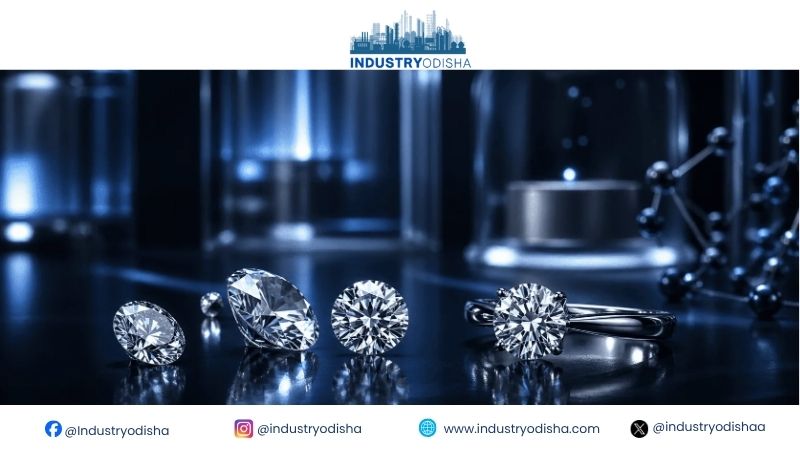
Industry Odisha Bureau, Oct 10: Natural diamond prices are under pressure as cheaper lab-grown diamonds gain ground. Jewellers are pushing rarity, new occasions and wider retail reach. India’s low diamond penetration still leaves room for growth.
India’s jewellers are sharpening their sales pitch for natural diamonds this festive and wedding season. Brands are stressing rarity, heritage and lasting value. The push comes as cheaper lab-grown diamonds compete for the same buyers. Jewellers also want new customers and more reasons to buy.
Prices under pressure
De Beers’ average realised rough-diamond price fell 32 per cent to $105 a carat. That covered the first half of 2026. Rough prices are not the same as retail jewellery prices. Smaller, lower-quality natural stones remain under pressure from lab-grown alternatives. De Beers has also paused its Venetia mine in South Africa for two years.
India remains the world’s second-largest natural diamond jewellery market after the US. De Beers says India accounts for 12 per cent of global demand.
New occasions, wider reach
De Beers wants diamonds bought beyond proposals and weddings. Its ‘Love From Dad’ campaign presents a second piercing as a diamond occasion.
Forevermark had 10 stores in India by July. It plans 20 by end-2026 and 100 by 2030. De Beers and the Gem & Jewellery Export Promotion Council created INDRA. The Indian Natural Diamond Retailers Association aims to draw in smaller jewellers.
Forevermark chief Shweta Harit says about 60 per cent of the market is unorganised. She estimates only 12 per cent of Indian jewellery pieces contain diamonds. In the US, the figure is about 70 per cent.
Titan’s two-track approach
Titan’s Tanishq runs diamond experience centres in about 200 stores. Customers can learn how natural diamonds differ from lab-grown ones. Managing director Ajoy Chawla stresses preciousness and value retention.
Titan’s studded jewellery grew in the early-30s per cent in the September quarter. Overall jewellery grew 21 per cent. Studded pieces are not necessarily all natural diamonds, though. Titan also launched beYon, a lab-grown diamond brand, in December 2025.
Lab-grown gains ground
Lab-grown diamonds cost roughly a tenth of comparable natural stones. However, jewellers typically do not accept them for resale.
At the International Gemological Institute (IGI), lab-grown jewellery certification revenue rose 44 per cent. Natural jewellery certification revenue grew just 2 per cent over the same April–June period. These are certification revenues, not retail sales. IGI counts over 1,000 lab-grown jewellery showrooms across India. Senco’s Sennes and Trent’s Pome also sell lab-grown pieces.
Room for both?
Indriya chief executive Sandeep Kohli values India’s jewellery market at about ₹8 lakh crore. He estimates diamond jewellery makes up less than 10 per cent. Kohli sees buyers choosing natural or lab-grown diamonds based on budgets.
The question is whether stronger marketing can lift natural diamond demand. For now, both categories are competing for the same jewellery box.
