



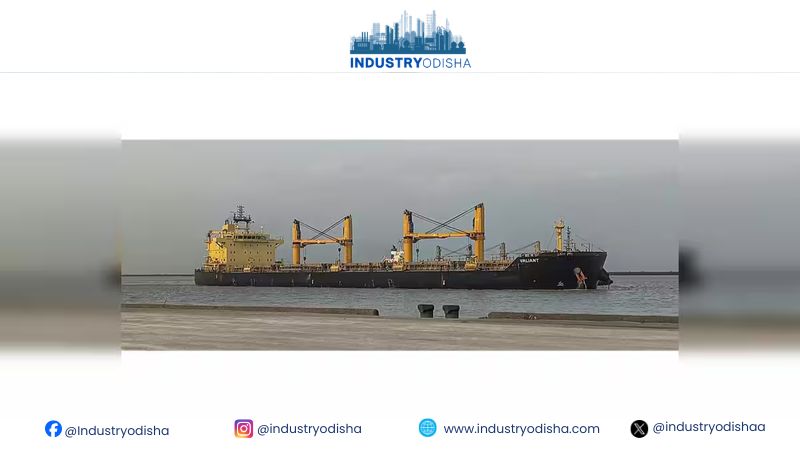
Industry Odisha Bureau, Sep 03: Iraq’s oil exports recovered significantly in August as improved Hormuz access encouraged buyers. Iranian authorities permitted some Iraqi oil tankers to transit the strategic strait region. India and China emerged as major buyers of heavily discounted Basrah crude shipments. Reliance Industries received four million barrels of Iraqi crude during the August period. Industry sources cited substantial savings and improved shipping economics as driving factors.
Iraqi state oil marketer SOMO offered August-loading Basrah cargoes at twenty-five to thirty dollar per barrel discounts on a free-on-board basis. The steep discounts attracted international traders, including Chinese state majors and independent refiners. Traders could potentially earn approximately ten dollars per barrel profit after shipping. Insurance costs were estimated at approximately seventeen dollars per barrel for crude movement. The narrow margins encouraged buyers to seek tanker availability despite Hormuz transit risks.
Iraq’s August exports rose to approximately two point three four million barrels daily. July exports had reached approximately one point three five million barrels daily previously. August shipments remained below February’s pre-war levels of three point seven million. Vortexa and Kpler shiptracking data provided independent confirmation of improved export activity. The recovery still leaves Iraq substantially below its pre-disruption production and export capacity.
Iranian permission for some Iraqi tankers represented a significant breakthrough after months. The scope of the permission remained unclear regarding coverage for all cargoes. Iraq was identified as the only Gulf producer explicitly granted such approval. The transit permissions supported improved tanker availability for Basrah crude loading operations. However, uncertainty persisted about whether permissions would remain consistent over coming months.
India’s Reliance Industries received four million barrels of Basrah crude during August. Bharat Petroleum’s officials confirmed they expected their first Iraqi cargo imminently. Reliance also chartered a very large crude carrier at record freight rates. The deployment of expensive tanker capacity reflected strong demand for discounted Iraqi crude. Indian refiners showed renewed interest in acquiring heavy sulphur crude from Iraq.
Chinese refiners purchased at least sixteen million barrels for September delivery destinations. Rongsheng Petrochemical, China’s largest independent refiner, acquired approximately half this volume. PetroChina loaded six million barrels during both July and August combined periods. Shenghong Petrochemical secured two million barrels for September arrival in Chinese territory. The substantial Chinese buying demonstrated strong regional demand for Basrah crude supplies.
Improved access through the Strait of Hormuz remains critical to sustained recovery. Shipping costs, insurance fees and tanker availability directly affect crude-export economics. The improved flows support greater Asian crude availability and refinery supply diversification. India and China’s growing purchasing activity reflects the commercial appeal of discounts. However, future recoveries depend entirely on maintaining stable Hormuz shipping access going forward.
