



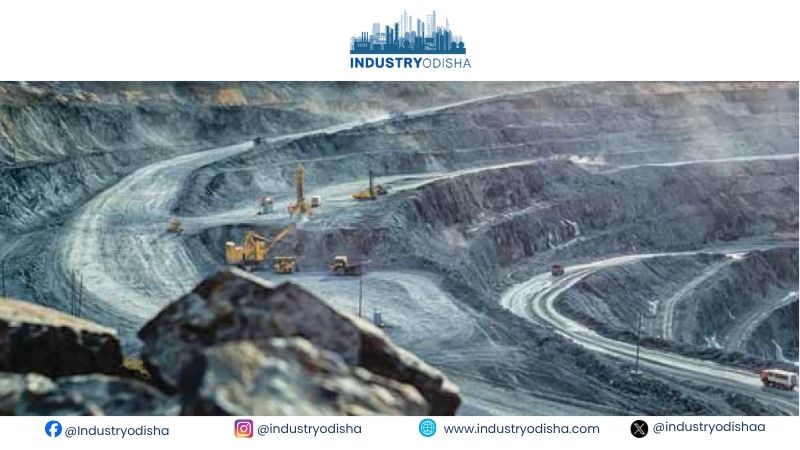
Industry Odisha Bureau, Sep 18: India’s mining and metals sector needs faster technology adoption for future competitiveness. A FICCI , KPMG report highlights resource efficiency and supply chain resilience as priorities. The sector faces rising costs, lower ore grades, and geopolitical uncertainty. Decarbonisation pressures are also reshaping long term investment decisions.
Technology Becomes Central to Competitiveness
Technology can help mining companies improve productivity and reduce operating costs. Automation can strengthen safety and improve equipment utilisation. Artificial intelligence can support planning, maintenance, and process optimisation. Digital systems can also improve real time decision making across operations. For India, technology adoption is becoming a strategic industrial requirement.
Supply Chain Resilience Gains Importance
Global disruptions have increased pressure on mineral supply chains. India needs stronger domestic processing and refining capabilities. A resilient supply chain can reduce exposure to international disruptions. It can also improve availability of critical industrial raw materials. Mining companies must therefore look beyond extraction alone.
Metals Demand Set to Rise
India’s metals demand will expand significantly over coming decades. Steel capacity is expected to rise sharply by 2047. Aluminium production could increase several times from current levels. Copper demand is also projected to more than double. That growth will require greater efficiency across the value chain.
Resource Efficiency Becomes Critical
Lower-grade ores are creating new challenges for mining economics. Companies must extract greater value from existing resources. Low-grade ores can become viable through better processing technology. Tailings and slimes also offer additional recovery opportunities. Scrap utilisation can further strengthen circularity across metals production.
Circular Economy Could Lower Dependence
India can improve resource security through greater recycling. Scrap based metals production can reduce dependence on primary mining. Recycling also lowers pressure on imported raw materials. Battery recovery could strengthen critical mineral availability. Such measures can improve both sustainability and supply chain resilience.
Data Can Improve Mining Productivity
Mining and metals companies already generate substantial operational data. The challenge is converting that data into measurable productivity gains. Advanced analytics can improve equipment performance. Predictive maintenance can reduce costly production disruptions. Better data usage can also support global competitiveness.
Decarbonisation Adds Fresh Pressure
Mining and metals remain highly energy intensive industries. Companies face stronger pressure to reduce emissions. Cleaner energy can improve long-term competitiveness. Low carbon production technology will become increasingly important. This transition will require significant capital investment.
India Needs End to End Capabilities
Future competitiveness will depend on more than mineral production. India needs stronger capabilities in processing and refining. Advanced materials will become another important growth area. Manufacturing integration can create greater domestic value addition. A stronger supply chain will also support strategic industries.
Technology Shift Becomes Strategic
India’s mining and metals sector is entering a structural transition. Production volumes alone will no longer define competitiveness. Technology, efficiency, and supply chain resilience will matter equally. Companies that adapt faster could capture greater long term value. For India, the technology shift could strengthen industrial and resource security.
