



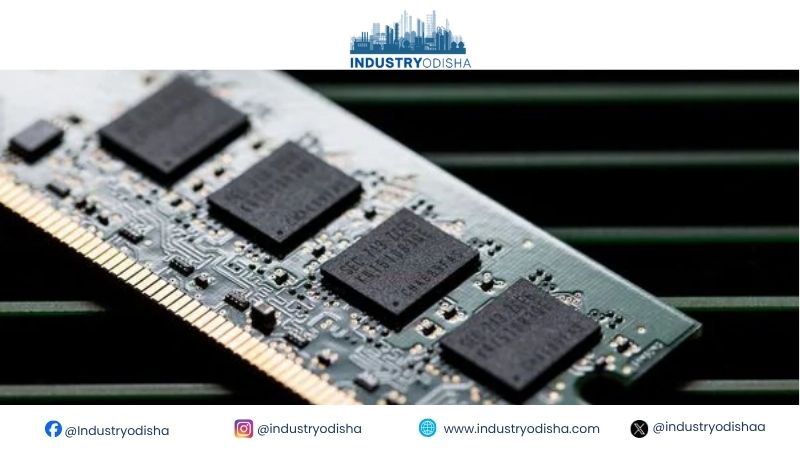
Industry Odisha Bureau, Oct 16: A price rise in memory chips is squeezing global brands in budget smartphones. Homegrown firms are stepping into the gap, helped by new MPMS incentives. Keeping phones affordable remains the real test.
A Market Opening Created by Costs
Rising memory chip costs are reshaping the economics of India’s budget smartphone market. Entry-level phones have become costlier to build. Several established global brands have scaled back in this segment, industry executives said. That shift is creating space for homegrown firms. The opening centres on smartphones priced below ₹20,000.
Memory Costs Squeeze Pricing
Memory components can make up around 40% of a budget handset’s bill of materials. The bill of materials is the total cost of a phone’s parts. With memory taking so large a share, any price rise hits hard. Makers must either absorb higher costs or raise retail prices.
Samsung, Oppo, Vivo and Xiaomi have reduced their exposure to entry-level phones, executives said. Mounting cost pressure drove that move, according to the same executives.
Indian Brands Explore the Gap
Wearable makers Mivi and Boltt have entered the sub-₹15,000 smartphone segment via Flipkart. Noise, boAt and GoBoult are also exploring entry, three senior executives said. Their positions, however, differ. GoBoult co-founder Varun Gupta said the company has no plans to enter smartphones. boAt co-founder Aman Gupta and Noise co-founder Amit Khatri did not respond to queries.
Ai+ and Lava Take Different Routes
Ai+ smartphones sells devices priced between ₹10,000 and ₹25,000. Founder and CEO Madhav Sheth said quarterly sales already match last year’s total. He argued Indian brands face no royalty or profit pressure from overseas headquarters. That, he said, puts pricing power in their own hands.
Sheth also warned that price alone is not enough. Indian brands must focus on design, hardware, software and supply chains, he said. According to him, the entry segment is where 80% of consumers sit.
Lava has felt the cost pressure directly. Head of product Sumit Singh said its entry-level 5G phone rose from ₹7,999 to ₹14,499. That is an increase of ₹6,500. Lava aims to stay competitive by focusing on what budget buyers truly need. It is refining component choices, optimising software and sourcing strategically. The company said its sales have more than doubled this fiscal year.
Legacy Brands Plan a Return
Older Indian names are also eyeing the opportunity. Karbonn is planning a festive-season relaunch, executives said. Micromax is still evaluating its return to smartphones. Founder and promoter Rajesh Agarwal said it is studying price points and sales channels.
Government Incentives Add Support
Government support is adding to the appeal. The Mobile Phone Manufacturing Scheme (MPMS) offers a 5% incentive for Indian brands. It adds a further 3% for Indian design and R&D. The scheme also includes non-fiscal support. Agarwal said MPMS is an opportunity that will provide some benefits. The actual gain for each company is yet to be seen.
Selling Online to Save Costs
The new wave of Indian brands is betting on online-first sales. Selling through e-commerce helps keep distribution and operating costs low. Those savings allow sharper pricing against Chinese makers and Samsung.
Opportunity Meets Reality
The opening for homegrown firms is real, but rising costs created it. The memory chip price rise affects every brand, Indian or global. Lava’s own price jump shows that no maker is immune. Winning buyers will depend on smart design, careful sourcing and solid software. Above all, brands must keep budget smartphones within reach of everyday buyers.
