



Industry Odisha Bureau, Oct 27: Early rabi planting trails last year, but it is too soon to judge the harvest.
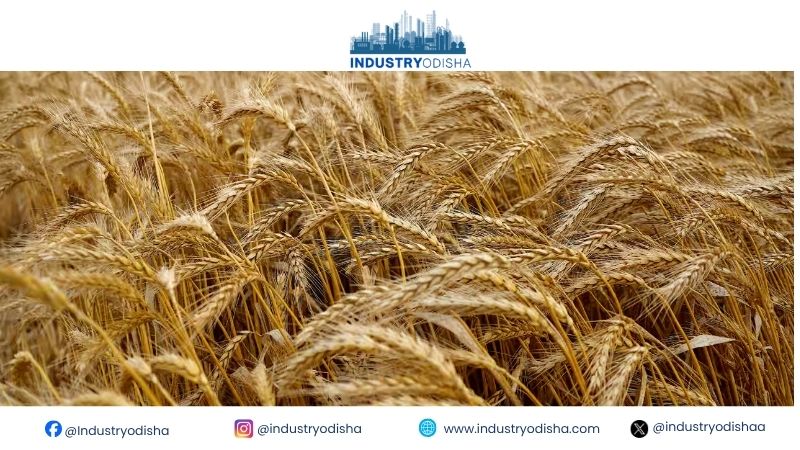
Wheat sowing has made a slow start after a deficient monsoon. Farmers had planted wheat on 11,000 hectares by October 23. That compares with 27,000 hectares at the same point last year. The early shortfall is about 59%, according to Agriculture Ministry data. The ministry noted that sowing has only just begun in a few states.
The numbers need perspective. Wheat is usually sown in October and November and harvested by March-April. Last season, the crop covered 336 lakh hectares. Current sowing is a tiny fraction of that eventual area. A slow start shows planting progress, not lost area or lower output.
The bigger concern is water. The June-September southwest monsoon was 13% below normal, the Met Department said. Weak rains leave less moisture in the soil when rabi sowing begins. They also leave reservoirs and canals with lower levels. Wheat needs several rounds of irrigation after sowing. Tight water supply can therefore delay planting, shrink acreage and hurt yields. Where canals run short, farmers may lean harder on groundwater, raising irrigation costs.
The deficits are sharpest in key wheat states. Punjab’s rainfall was 38% below normal, and Rajasthan’s was 22% short. Both states had below-normal reservoir storage at the end of September. Together, they account for about 31% of India’s wheat area. Punjab’s dense irrigation network may cushion the rainfall gap. A rainfall deficit there does not automatically mean lower output. Rainfed areas face greater risk, according to experts cited by PTI. These include parts of Rajasthan, Madhya Pradesh, Gujarat, Bundelkhand and central India. They cannot easily replace missing monsoon moisture with canal or groundwater irrigation.
The slowdown extends beyond wheat. Total rabi acreage stood at 18.02 lakh hectares, against 28.26 lakh hectares. That is a decline of roughly 36%. Oilseeds fell to 13.38 lakh hectares from 21.34 lakh hectares. Pulses dropped to 3.27 lakh hectares from 4.39 lakh hectares. Rice acreage more than halved, to 1.02 lakh hectares from 2.13 lakh. Coarse cereals bucked the trend, rising to 23,000 hectares from 13,000. Pulses and oilseeds deserve close watch given their role in household diets.
The ministry has set a wheat target of 121 million tonnes for 2026-27. That is marginally above last year’s record harvest of 120.7 million tonnes. A target is an official goal, not an independent forecast. Its outcome will depend on final acreage, irrigation, winter temperatures and crop health.
For now, early figures signal risk rather than damage. The November sowing data will show whether farmers close the gap. Reservoir releases and groundwater access in Punjab and Rajasthan will be decisive. Winter temperatures during grain filling will then shape yields. The real question is whether water, not willingness, limits this year’s wheat crop.
