



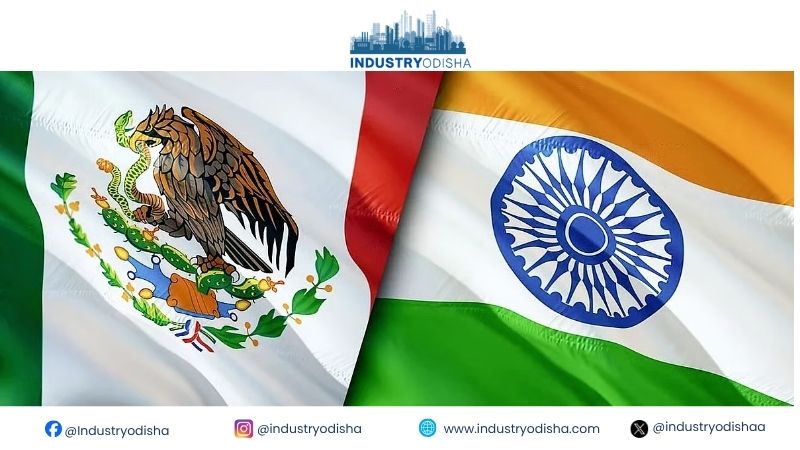
Industry Odisha Bureau, Oct 37: India and Mexico will launch negotiations on a limited preferential trade agreement. Tariff relief, however, remains some distance away.
India and Mexico are set to formally open negotiations on a preferential trade agreement. Commerce Secretary Rajesh Agrawal is on a two-day visit to Mexico City. He will sign the Terms of Reference, which set the framework for talks. The move responds to steep Mexican import duties that now apply to Indian goods. Signing the ToR starts the negotiation process; it does not cut any tariffs.
In a post on X, Agrawal said the visit would launch PTA negotiations. He also plans meetings with Mexican officials and the business community. The aim, he said, is to deepen bilateral cooperation.
The pressure stems from Mexico’s revised tariff regime, effective January 1, 2026. It covers 1,463 tariff classifications, with duties ranging from 5% to 50%. The higher rates apply to countries without trade agreements with Mexico, including India. Mexico says the measures aim to strengthen domestic manufacturing and raise local content. They are also meant to protect jobs. Higher duties raise the landed cost of imported goods. Exporters must then cut margins or accept weaker price competitiveness. Suppliers from countries with Mexican trade deals may avoid that handicap.
Automobiles are India’s most exposed sector. According to BusinessLine, passenger vehicle import duties have risen to as much as 50%. Indian automakers treat Mexico as an important export market. India exported about $1.92 billion worth of automobiles to Mexico in 2025-26. That is roughly a third of total merchandise exports of $5.73 billion. Engineering goods also form a substantial share of India’s shipments. Other affected sectors include textiles, footwear, plastics, steel, chemicals, aluminium, appliances and toys. Bilateral merchandise trade stood at about $7.83 billion during the year. India thus runs a sizeable surplus, exporting far more than it imports. Higher duties signal competitive risk, though no export losses have been quantified.
A PTA differs from a comprehensive free trade agreement. It offers tariff concessions on a selected list of products only. An FTA usually covers a far wider range of trade commitments. This narrower scope makes a PTA relatively easier to negotiate. That suits India’s immediate goal of regaining access in specific sectors. Yet the negotiation will raise hard questions. Both sides must agree which products qualify and how deep the cuts go. Rules of origin will decide which goods can actually claim preferences. Mexico may also guard industries its new tariffs were designed to protect.
Mexico’s role in North American manufacturing adds to its appeal for Indian firms. But preferences in Mexico would not extend to the United States or Canada. The real test lies in product coverage. A PTA will matter only if it covers India’s key exports, especially automobiles. Mexico must weigh that against its local manufacturing goals. Launching talks is the easy step; meaningful tariff cuts will be the harder bargain.
