



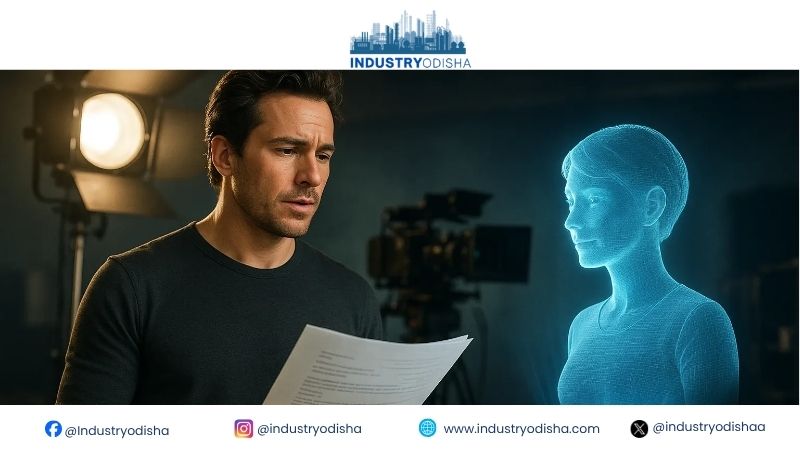
Industry Odisha Bureau, Oct 05: AI cloning opens a new monetisation route for celebrities and creators. Licensed faces and voices could feature in ads and branded content. Consent and control remain the big questions.
A celebrity’s face and voice were once tied to their physical presence. AI cloning is loosening that link. Approved digital versions can now appear in content without the star on set.
That turns identity into something closer to a licensable asset. For Indian film stars, cricketers and creators, it opens a new monetisation route. Cricketers Hardik Pandya and Shubman Gill are among the early adopters.
Beyond the celebrity shoot
Traditional endorsements depend on a star’s limited time and availability. Each campaign usually needs a physical shoot. AI cloning changes that equation.
Dipankar Mukherjee, cofounder of Studio Blo, says brands are no longer bound to shoots. They can create celebrity images and videos in different locations and situations. The content can be shaped to suit each creative brief, he says. He sees an even bigger benefit in branded content.
For celebrities, this could mean new income from advertising and branded entertainment. Digital content offers another potential outlet. Every use, however, still depends on what the celebrity approves.
A new creator revenue stream
The opportunity is not limited to film stars and sports icons. Emerging creators could also license their identities. That income could sit alongside brand partnerships and platform monetisation.
Sparkonomy is targeting this wider creator base. Cofounder Guneet Singh says AI could let creators license or lease their identities. That could earn them income alongside brand deals and sales commissions, he says.
The markets involved are sizeable. Industry estimates put India’s celebrity endorsement market at ₹3,000 crore. The influencer marketing sector is projected at ₹3,500 crore. The two may overlap, so they should not simply be added together.
Building the licensing infrastructure
New platforms aim to manage these rights. Studio Blo’s FAIMOUS lets celebrities create, control and license their AI clones.
Sparkonomy is launching the Open Creator Graph, or OCG. It is described as open infrastructure for creators. Creators can use it to establish their identities. They can also set how AI systems use their content and likeness. OCG is still at the launch stage.
Consent becomes the asset
Mukherjee frames the bigger prize as the “monetisation of consent”. The idea is simple. Copying a face or voice is becoming technically easier. But a copy made without permission has little legitimate commercial value.
What brands need is authorised access to a person’s digital identity. That permission, not the clone itself, becomes the asset worth licensing. Scarcity is shifting as a result. A star’s time once limited how much content could be made. Now the limit may lie in authorised identity rights.
Control becomes the challenge
The same technology also carries real risks. Generative AI makes faces and voices easier to replicate. That raises concerns over consent and unauthorised use. Questions also arise over who owns and controls a digital identity.
A licensed clone and an unauthorised copy may look exactly alike. What separates them is permission.
From influence to licensed identity
Celebrity economics has long rested on reach, recognition and personal appearances. AI cloning could add another layer: authorised digital identity. Creators may gain similar options alongside their existing income streams.
How far this market goes depends on one thing. Consent must stay enforceable and firmly with the person being cloned.
