



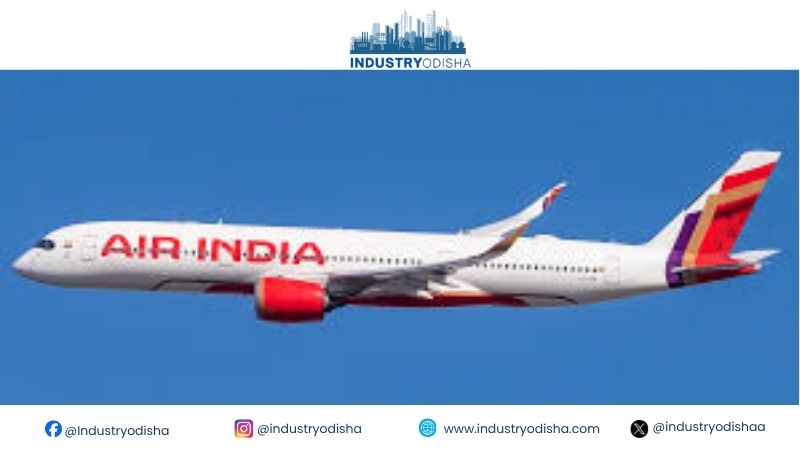
Industry Odisha Bureau, Oct 05: Air India has sought a fast hearing in a 38-year-old crash dispute. At stake is whether road-accident formulas should decide air-crash payouts. The ruling could guide future aviation claims.
A dispute from 1988 could still shape how India compensates air-crash victims. Air India has asked the Supreme Court for a fast hearing in the case. It filed the application on 1 October, and the plea is listed for Monday.
The case stems from the crash of Indian Airlines Flight IC-113 near Ahmedabad. Pending in the top court since 2010, it turns on one question.
Road rules for an air disaster?
Should air-crash compensation follow formulas built for road accidents? Those formulas come from the Motor Vehicles Act. They give courts an established method for valuing loss after road deaths.
The victims say aviation needs a different approach. In written submissions filed in October 2025, they set out why. Passengers have no control over an aircraft’s operation or safety, they argued. That, they say, makes air crashes fundamentally different from road accidents.
Pricing decades of lost earnings
The victims want compensation based on actual economic loss. That means looking at a person’s income and future earning capacity. Changes in earnings over time should count too, they argue. So should inflation.
The logic is simple. A fixed income figure may miss decades of potential future earnings. Inflation can also change the real value of an award over time.
Alay Razvi, managing partner at Accord Juris, says this could raise compensation exposure. A more individualised assessment could produce larger awards in some cases. These might involve young victims or high-income earners. Professionals with demonstrable career growth could also be affected. So could families with substantial financial dependency.
Airlines and insurance
The victims also point to the nature of airlines themselves. They describe carriers as large, financially capable and insured enterprises. Awards should not be restricted by road-accident formulas for that reason, they argue. Insurance availability should be weighed to ensure full and just compensation, they add.
Insurance shapes who bears the cost of a crash. It does not, by itself, fix what victims are legally owed.
A case travelling since 1988
The crash took place on 19 October 1988. Flight IC-113 from Mumbai crashed while approaching Ahmedabad airport. Of 135 people aboard, including six crew, 133 were killed. Two passengers survived, one with substantial physical and mental disabilities.
Families and survivors filed 38 civil suits between 1989 and 1992. The Ahmedabad City Civil Court decided the claims in 2002. The Gujarat High Court revised several awards on appeal in 2009. The matter reached the Supreme Court in 2010.
In April 2010, the court noted that compensation against Indian Airlines had been deposited. It was lodged with the Ahmedabad City Civil Court, along with interest. The Airports Authority of India had deposited 30% of the compensation. The court allowed disbursement to claimants who furnished security other than a bank guarantee. The live dispute is therefore about principle, not just payment.
A chance to clarify the formula
The victims cite the 2010 Mangalore air-crash case. There, the Supreme Court applied Motor Vehicles Act principles to compensation. But it did not decide whether that framework governs air crashes generally, they argue.
In September 2025, Air India asked the court to keep the legal question open. That would allow it to be considered in connected or future proceedings.
Satyam Dwivedi, managing partner at DC Law Offices, sees a wider opportunity. The aviation law specialist wants the court to invoke Article 142. That provision lets the Supreme Court pass orders needed for complete justice. Dwivedi says it could be used to frame standard compensation guidelines. In his view, a life should not be valued differently by mode of travel.
That creates a tension. Standard rules promise consistency. Individual assessment promises a closer fit for each family.
What airlines and insurers could face
A change in method could alter how airlines assess potential liability. Insurers might also need to revisit how they model aviation risk. Razvi says airlines could face more exposure in shared-liability cases. This applies where liability lacks a statutory or convention-based cap. For families, clearer rules could reduce uncertainty over future claims.
Air India and the Airports Authority of India did not respond to emailed queries.
An old case with future reach
The hearing follows last year’s Air India crash, which killed 260 people. Pleas on air safety and that crash’s investigation remain before the court.
