



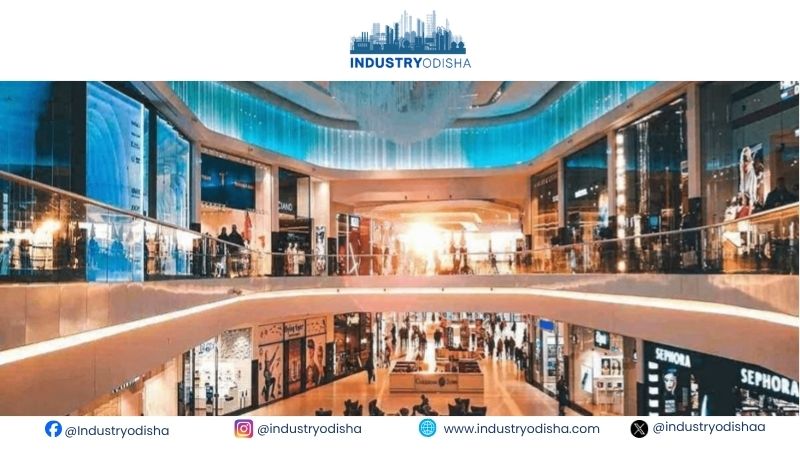
Industry Odisha Bureau, Sep 26: India’s organised retail stock has reached 186.2 million sq ft across 12 markets. Experience-led tenants and office-linked formats are reshaping demand. A pipeline of bigger malls, totalling 40.4 million sq ft, runs to 2030.
India’s organised retail market is growing along several fronts at once. Floor space is rising, but its shape is changing too.
Retail stock across 12 markets now stands at 186.2 million sq ft. Malls are getting bigger, and experience-led tenants are taking more space. Office districts have also become a significant retail channel. Together, these shifts mark a retail boom that is broader, not merely larger.
Organised Retail Stock Expands Beyond Malls
Shopping malls remain the largest format, with 114.3 million sq ft. Office-led retail accounts for 51.7 million sq ft. High-street retail adds a further 20.2 million sq ft.
Organised retail stock is therefore not the same as mall stock. A substantial portion now sits in offices and high streets.
Total organised retail stock has grown ninefold over two decades.
Bengaluru Leads India’s Top Retail Markets
Bengaluru is the largest organised retail market among the 12 cities. It holds 29.2 million sq ft of retail stock. Gurugram follows with 27.4 million sq ft. Hyderabad has 24.8 million sq ft, and Mumbai 23.8 million sq ft.
Experience-Led Retail Takes More Leasing Space
The tenant mix inside these spaces has shifted markedly. Experience-led categories raised their leasing share from 54% in 2013-15. By 2023-25, that share had reached 72%. Apparel and fashion formed a large part of this change. Its share climbed from 25% to 35% across the two periods.
Food and beverage, or F&B, rose from 11% to 15%. Department stores, MBR essentials and grocery grew from 3% to 11%. These figures track leasing share, not consumer spending share. Still, they show where retailers are committing space.
Bigger Malls Drive Growth in the Retail Pipeline
New shopping mall supply of 40.4 million sq ft is in the pipeline. That supply runs through 2030. Pipeline projects are planned supply, not completed stock.
Hyderabad and Gurugram together account for 51% of the identified pipeline.
The next generation of malls is also projected to be larger. New malls during 2026-30 are projected to average 0.59 million sq ft. Before 2000, the average mall measured 0.25 million sq ft. That average hides variation, as individual malls will differ in size. Even so, the shift points towards larger destination-led developments.
Office-Led Shopping Creates Another Retail Channel
Office-led shopping is also driving growth in organised retail. The format added 15.4 million sq ft during 2021-25. Its total stock now stands at 51.7 million sq ft.
Gurugram recorded 10 million sq ft of office-led retail additions. Mumbai followed with 8.4 million sq ft, and Pune with 7.4 million sq ft.
These city figures are not total retail stocks for those markets. The format sits alongside malls and high streets.
A Bigger, More Varied Retail Market
India’s retail real estate is changing in three ways at once. Developments are getting bigger. Tenant mixes are tilting towards experiences, fashion and dining. Retail locations are spreading beyond malls into offices and high streets.
The market’s growth now depends on format and mix as well as size.
