



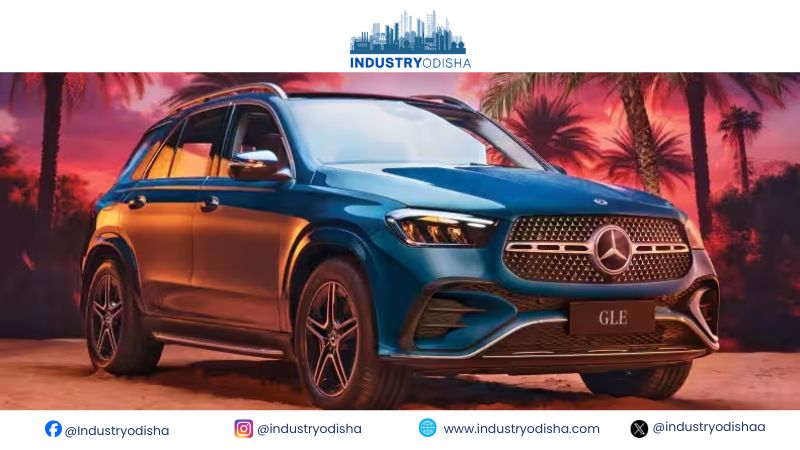
Industry Odisha Bureau, Sep 03: Mercedes-Benz views India as substantially more than a luxury vehicle market. The German automaker plans to introduce many more models over coming years. CEO Ola Kallenius underscored the company’s expanded India strategy at SIAM’s Annual Convention 2026. His announcement signals Mercedes-Benz’s recognition of India’s expanding importance to global automotive companies.
India represents a key growth market for Mercedes-Benz’s premium automobile portfolio expansion strategy. Beyond vehicle sales, the company identifies India as a significant technology and talent hub. The German automaker sees India as providing capabilities required by global technology-oriented OEMs. This perspective extends beyond traditional manufacturing to encompass innovation and technical expertise advancement.
Kallenius emphasized that Mercedes-Benz has established substantial presence within India’s premium automotive landscape sector. The company’s growth trajectory has prompted expanded investment focus in India’s market opportunities. Additional model launches will likely broaden Mercedes-Benz’s presence considerably across diverse customer segments. However, specific details regarding model timing and segment targeting remain undisclosed at present.
India’s automotive ecosystem provides Mercedes-Benz access to diverse creative and technical talent pools globally. The country’s technological infrastructure supports development requirements of advanced international automotive manufacturers effectively. Production and supply ecosystems within India continue expanding to support international automotive standards. These emerging capabilities explain why global technology-oriented OEMs increasingly view India as strategically important.
India’s automotive landscape includes domestic manufacturers such as Tata Motors alongside international automobile players. Tata Motors operates within India’s evolving automobile sector as a significant domestic manufacturer. Global automotive companies’ expansion strategies suggest India’s relevance extends far beyond domestic market dynamics. The country’s industrial capabilities increasingly attract attention from world-leading automotive and technology firms.
Kallenius drew comparisons between India and Germany regarding available technological and manufacturing capabilities. Germany remains Mercedes-Benz’s historical business foundation and primary global operational headquarters and base. However, Kallenius argued that India now offers comparable capabilities across multiple operational dimensions. India provides the comprehensive suite of competencies required by advanced technology-focused automotive manufacturers.
Mercedes-Benz’s long-term India strategy incorporates industrialisation aligned strategically with the company’s market opportunities. This approach suggests the company intends deepening its operational footprint significantly within India. However, successful expansion ultimately depends on effective market execution and ecosystem development initiatives. The coming years will demonstrate whether additional models achieve sustainable market acceptance and growth.
India’s growing importance to global automotive manufacturers reflects the country’s emerging industrial capabilities substantially. Mercedes-Benz’s expanded India strategy underscores India’s transformation beyond a simple vehicle sales destination. The country increasingly represents a technology hub attracting global automaker investment and strategic operational focus.
