



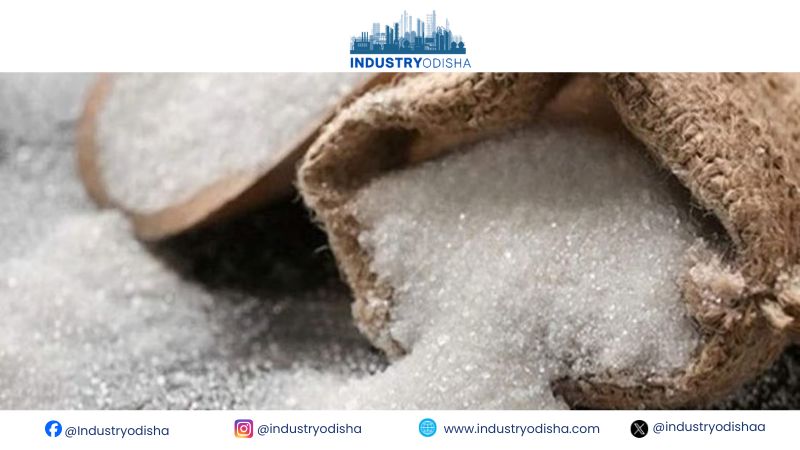
Industry Odisha Bureau, Aug 22: Sugar prices surged from ₹48.18 to ₹58.20 per kilogram over a one-month period in July-August. The government attributed the increase primarily to lower-than-expected domestic sugar production rather than ethanol diversion. Higher festive-season demand and weather-related crop damage have further tightened India’s domestic sugar availability.
Current-season domestic sugar production is estimated at approximately 30.6 million tonnes overall. This represents a significant shortfall from the initial production estimate of 34.35 million tonnes. The production decline reflects substantial weakness in sugarcane output during the growing period.
Crop damage drove the shortfall through multiple agricultural challenges affecting India’s sugarcane farms. Red rot and top borer diseases reduced plant health and productive capacity significantly. Waterlogging from excess rainfall compounded these challenges by degrading soil conditions during cultivation.
The government has long asserted that sugar diversion toward ethanol production remains manageable currently. Sugar diversion fell from approximately 12 percent of production in 2022-23 to approximately 9 percent in 2025-26. This declining share weakens arguments that ethanol diversion caused the sugar price spike significantly.
Nearly three-fourths of India’s ethanol production now comes from grains, particularly maize feedstocks. The transition toward grain-based ethanol reduces pressure on sugar supplies for industrial applications. This shift reflects both policy evolution and availability of alternative feedstock sources domestically.
Tighter domestic sugar availability has coincided precisely with stronger demand ahead of the festive season. This convergence of lower production and higher demand has intensified pressure on retail sugar prices. Supply-demand imbalances in commodity markets typically transmit directly into consumer-facing price movements.
The government has moved decisively to contain price pressures through multiple policy interventions simultaneously. Authorities have implemented stronger measures against hoarding by sugar mills and commodity traders. These actions aim to improve market transparency and discourage artificial supply constraints being created.
Sugar imports have been permitted for the first time in nearly a decade officially. Augmenting domestic supplies through international purchases is intended to strengthen availability immediately. Import authorisation signals government concern over domestic supply adequacy ahead of the festive season.
The sugar price hike in India also reflects broader concerns about food-price pressures affecting Indian households. Agricultural commodity price movements matter significantly for household budgets and inflation management overall. Sugar represents a widely consumed food ingredient affecting food-price dynamics across the economy.
Lower domestic production combined with festive demand has created a tight supply situation currently. The government’s multi-pronged response through imports and anti-hoarding measures indicates serious supply-side concerns. Agricultural challenges require sustained policy attention to ensure stable commodity availability and pricing.
