



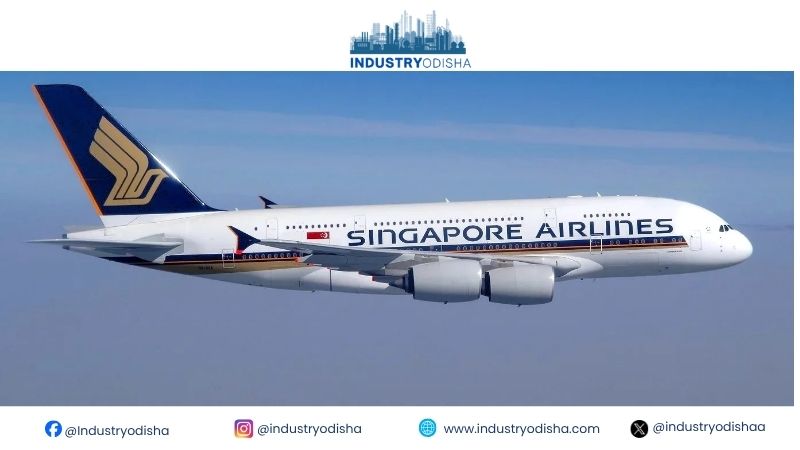
Industry Odisha Bureau, Oct 26: Tribunal allowed the claim after the airline proved passengers got back both fares and tax.
An airline can recover GST paid on cancelled air tickets, a tax tribunal has ruled. The condition is proof that passengers received both their fare and the tax. The Ernakulam Bench of the GST Appellate Tribunal (GSTAT) gave the ruling. It came in Singapore Airlines Ltd versus Commissioner of CGST & CE, Kochi. The decision allows the airline’s refund claims on that basis.
The dispute covers October 2019 to March 2021. Pandemic travel restrictions forced airlines worldwide to cancel services at short notice. During the COVID-19 pandemic, Singapore Airlines cancelled flights and refunded affected passengers. Those refunds included both the ticket fare and the GST collected. The airline then filed eight GST refund claims with the tax department. Together, they totalled ₹45,92,528, or about ₹45.93 lakh.
The problem lay in the airline’s tax accounts. When a sale is cancelled, a business usually issues a credit note. This document records that the payment, including tax, has been returned. Ordinarily, the credit note reduces the seller’s output tax, the GST owed on supplies. Singapore Airlines, however, could not adjust its credit notes against output tax. The GST it had already paid therefore stayed with the government. A refund claim was its route to recover that amount.
A GST Joint Commissioner rejected the claims. The report does not detail the grounds for that rejection. The airline then appealed to the GSTAT.
The case turned on unjust enrichment. Under indirect tax law, refunds generally go to whoever actually bore the tax. If customers ultimately bear the tax, the business usually cannot claim it back. Otherwise, it would gain twice, once from customers and once from the government. Here, the tribunal found “sufficient evidence” that refunds had reached passengers directly. It concluded the tax burden had not been passed on. Passengers, in effect, had already been made whole.
The GSTAT directed the revenue department to process the claims within two weeks. It also ordered payment with interest. The report did not specify the interest rate. The direction is intended to bring the long-running claim to a close.
The ruling does not create an automatic refund for every cancelled ticket. Nor does it give passengers a second GST refund. The claim belongs to the airline, which had already reimbursed travellers. Its outcome rested on evidence that refunds were fully passed through. The burden of proof remains firmly on the claimant.
For airlines, the case highlights the value of careful records. Ticket invoices, cancellation logs, credit notes and payment trails may all prove relevant. Such documents can show where the tax burden finally fell. Tax authorities, for their part, must still verify each claim on its facts. The ruling offers guidance for similar disputes over cancelled services. Its wider effect will depend on how future cases are argued.
