



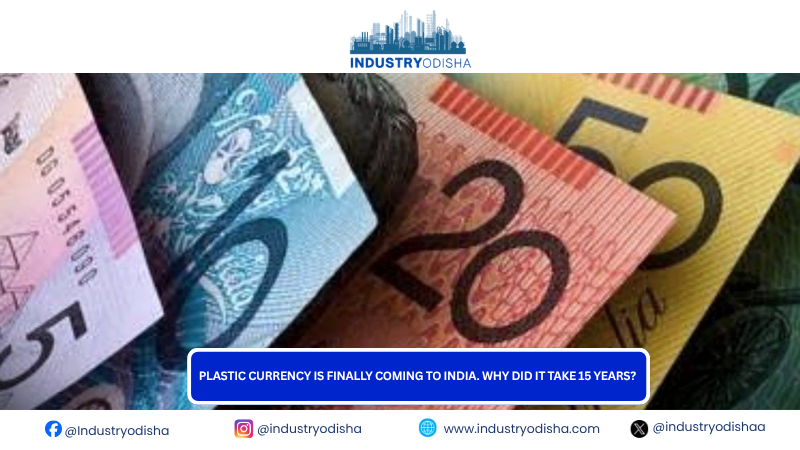
Industry Odisha Bureau, August 1: India is finally moving ahead with its much delayed plan to introduce plastic currency in the country. The Centre has approved the Reserve Bank of India’s (RBI) proposal to conduct a field trial of Rs 10 and Rs 20 polymer currency notes. This marks a significant step towards modernising the country’s cash system. The polymer notes will circulate alongside the existing paper currency during the trial phase/
The move revives a proposal first introduced by the RBI in 2009. Although the Centre approved a pilot project in 2012, the transition stalled after early field trials exposed operational challenges. Tests were conducted in Kochi, Mysore, Jaipur, Shimla, and Bhubaneswar. They found that polymer notes generated static electricity and friction while passing through high-speed currency processing machines. This caused notes to stick together and increased errors in counting.
Environmental concerns also delayed the rollout. However, an assessment by The Energy and Resources Institute (TERI) concluded that while polymer notes have a higher manufacturing footprint initially, their longer lifespan reduced the need for frequent reprinting, making them more cost effective and environmentally beneficial over time.
The shift also faced practical hurdles. India depended on imported polymer material, while banks were reluctant to invest in upgrading currency-handling infrastructure. The 2016 demonetisation further pushed the project to the sidelines as the RBI prioritised restoring cash circulation and suspended experimental initiatives.
Globally, more than 60 countries have adopted polymer bank notes. These countries include Australia, Canada, New Zealand, and the United Kingdom. These notes are more durable, resistant to moisture and tearing. They also incorporate advanced security features such as transparent windows, holograms and colour shifting elements.
