



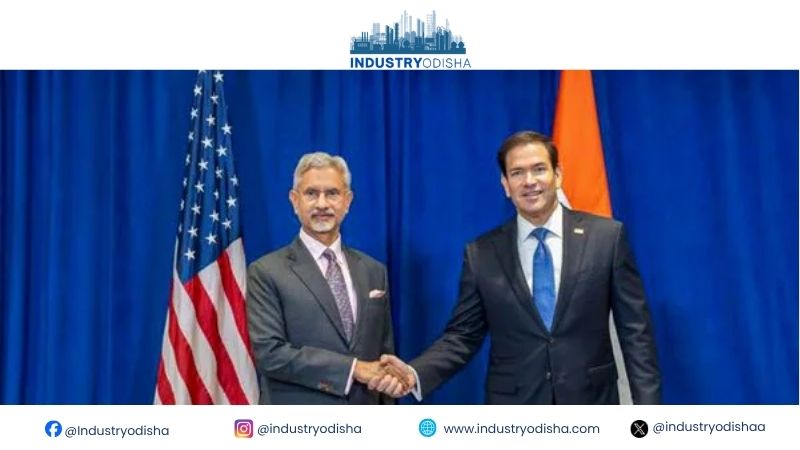
Industry Odisha Bureau, Oct 18: Trump has deferred tariffs threatened over Russian energy purchases by India and four others. Rubio said India has diversified imports but cannot pivot overnight. A 60-day review will weigh the economic fallout.
Washington has paused threatened tariffs on India’s Russian energy purchases, at least for now. US Secretary of State Marco Rubio said India had diversified its energy imports. Yet it still buys substantial energy from Russia, he noted. “It’s hard to pivot from one day to the next,” Rubio said.
President Donald Trump deferred the measures in an executive order on Friday. Rubio said Trump wants 60 days to study what sanctions and tariffs would mean. That review covers the global economy and the US economy itself. The penalties have been deferred, not withdrawn. Trump remains free to apply them whenever he chooses.
The threat stems from the Lindsey O Graham Sanctioning Russian and Iran Act. It allows tariffs of up to 500% on Russian exports to the US. Another provision permits tariffs of up to 100% on top Russian energy buyers. These are secondary sanctions, which penalise third countries trading with a sanctioned state. India, China, Azerbaijan, Slovakia and Hungary were identified as likely targets. Trump invoked Section 115, the Act’s waiver clause, citing national interest.
Rubio also stressed the wider relationship. He called India an “important ally and partner” of the United States. The two countries are strategic partners rather than formal treaty allies. Washington, he said, needs time to find “the right combination” of measures.
Procurement realities help explain the difficulty. Refiners often buy under existing arrangements and tune plants to particular crude grades. Replacing a large supplier also means securing shipping, pricing and alternative cargoes. Diversifying gradually is therefore different from cutting a source off at once. For India, a large importer, steady and affordable supply supports fuel prices and industry. Abrupt curbs on major energy flows could also unsettle global markets.
The Act also targets Russian financial institutions and their international partners. Such measures aim to press Moscow to end its war with Ukraine. Financial curbs can complicate payments, even where goods themselves face no tariff.
The waiver followed a diesel supply deal with Moscow announced last week. Trump said he agreed it over a phone call. He said Russia would immediately supply over 300,000 tonnes. A further 500,000 tonnes would follow in November, then 1 million tonnes. Another 3 million tonnes would come later, he posted on Truth Social. These are announced volumes, not confirmed deliveries. No direct link between the deal and the waiver has been established.
The report described both as part of conciliatory US moves towards Russia. They come ahead of US midterm elections on November 3. Fuel costs are politically sensitive, though no electoral motive has been stated.
For India, the waiver offers breathing room rather than certainty. Refiners and exporters still face the possibility of tariffs once the review ends. New Delhi must keep balancing affordable energy against diplomatic pressure from Washington. Washington’s next move will hinge on how it weighs economic costs against strategic aims.
