



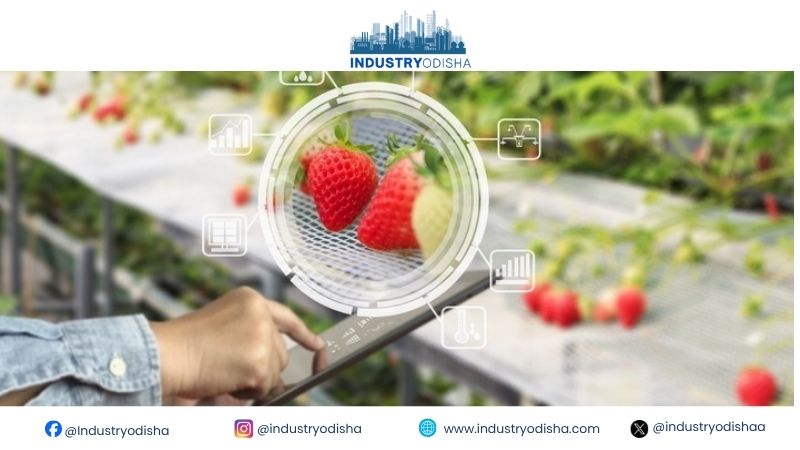
Industry Odisha Bureau, Oct 24: Real-time data could help India buy food smarter and waste less. Satellite forecasts and truck tracking point the way. Small farmers, however, must share the gains.
India’s food procurement is slowly shifting from habit and history towards real-time data. Buyers have long relied on past volumes, trusted suppliers and periodic price signals. That approach is struggling to keep pace with complex, climate-exposed supply chains. Kunal Gupta, who heads rice procurement at KRBL, argues data will shape the next phase.
Gupta envisions procurement drawing on many data streams at once. These include satellite imagery, weather forecasts, crop estimates and warehouse stocks. Transport movements, consumer demand, quality tests and carbon measurements add further detail. Combined, they could help buyers anticipate supply rather than react to it. His is an industry perspective, and many proposals remain aspirational.
The case is especially strong in India. Gupta cites figures showing agriculture and allied activities support 46.1% of the workforce. Yet fragmented landholdings, patchy storage and weak market links continue to depress farm incomes. Climate-driven swings in yields add further uncertainty. The Economic Survey 2025–26 records wide productivity gaps across crops and states. A single procurement strategy therefore rarely fits every region.
Gupta cites a World Bank estimate putting global food loss and waste near 30%. Loss occurs during harvest, storage and transport; waste happens mainly at retail and home. Better data cannot remove these losses entirely. It can, however, expose weak points and sharpen buying decisions.
Predictive tools combine satellite images, weather models and field records to forecast harvests. Such forecasts could help agencies plan storage, transport and price support in advance. Early warnings may flag shortages before they hit markets. They could also prepare capacity before bumper crops clog warehouses and mandis. Forecasts are only as good as their inputs, however. Flawed crop estimates can trigger costly over-procurement or damaging shortages.
The Department of Food and Public Distribution has introduced Anna Chakra to streamline PDS logistics. The PDS delivers subsidised grain to millions of households. A Vehicle Location Tracking System monitors foodgrain trucks in real time. Their stated goals are efficiency and visibility; wider results need independent assessment.
Globally, the World Food Programme uses digital tools for sourcing and route planning. Its SCOUT platform applies AI to food sourcing and delivery planning. According to Gupta, SCOUT saved $3 million in 2024. Humanitarian savings, however, may not translate directly to India’s farm markets.
Gupta outlines five priorities. First, link farmers, FPOs, mandis, warehouses, transporters, processors and retailers through interoperable systems. Second, invest in data quality to avoid errors. Third, treat small farmers as participants, with digital access, fair prices and transparent contracts. Fourth, reward lower water use, healthier soil, fewer emissions and reduced food loss. Fifth, protect consent, privacy and cybersecurity, and keep algorithms accountable. More data alone will not raise farmers’ bargaining power. Unequal digital access could leave smallholders behind.
Technology will not replace farmers or procurement officers. Shared, verifiable data should strengthen human judgement, not override it. Physical infrastructure, from storage to roads, remains essential. Success should be measured beyond tonnes procured. Farmer earnings, nutrition, resilience and environmental performance are better yardsticks.
