



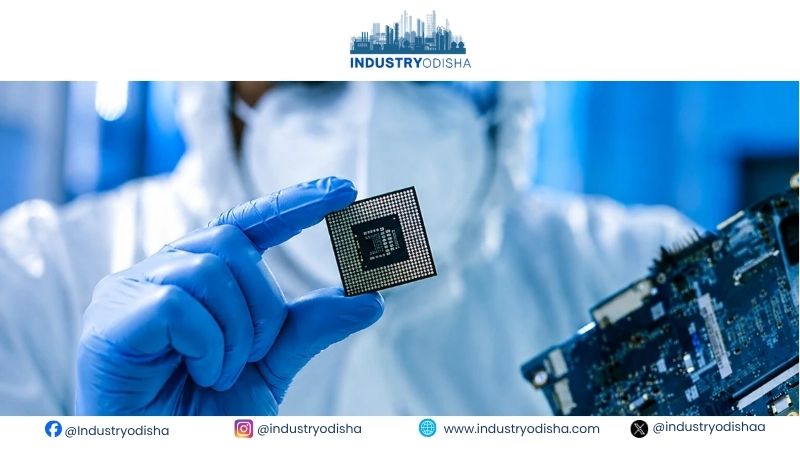
Industry Odisha Bureau, Sep 22: India is looking past wafer fabrication for its next semiconductor gains. Design, materials and advanced packaging now sit at the centre of the strategy.
A new report reframes India’s semiconductor story. Fabrication plants are no longer the sole focus. Design, materials, equipment and packaging matter just as much. Research and electronics manufacturing complete the picture. YES Securities laid out this view after SEMICON India 2026.
A Wider Value Chain Comes Into Focus
Fabs alone won’t capture India’s biggest semiconductor gains, the brokerage suggests. Real opportunity spreads across suppliers, equipment makers and materials firms. Packaging companies and chip designers stand to gain too. The report frames wafer fabrication as just one piece.
Semicon 2.0 Backs The Expanded Vision
Policy support anchors this broader push. Semicon 2.0 carries an outlay of Rs 1,27,500 crore. Six areas fall under its scope. These include design, machinery, materials, new fabs, ATMP/OSAT, research and talent. Roughly Rs 1 lakh crore in commitments have arrived so far. Officials expect these to materialise within two to three years.
Foreign Investment Signals Growing Confidence
Global firms are backing India’s ecosystem ambitions. Applied Materials committed USD 5 billion over ten years. That funding targets research, supply chains and talent development. Lam Research plans about Rs 10,000 crore for a silicon-component plant. Local research and development work will also expand.
Tata Electronics has struck seven agreements linked to Dholera. Fabrication and advanced packaging feature among them. Materials sourcing, vendor development and workforce training round out the deals.
Where India Still Falls Short
Some ecosystem pieces remain thin, the report acknowledges. Specialised gases, semiconductor materials and precision equipment top that list. This isn’t framed as weakness, though. YES Securities calls for targeted capability-building instead. Complete self-sufficiency isn’t the aim. Working with global suppliers can continue alongside domestic growth.
Design Talent Is India’s Trump Card
Chip design is where India already leads. Government data cited in the report shows nearly 20 percent of global design talent sits in India. That’s a workforce statistic, not a claim of ownership. The real test now is different. India must move from contract design work toward owning intellectual property. Products and systems built on Indian IP would mark that shift.
Packaging And Mature Nodes: The Next Frontier
Advanced packaging could unlock fresh value. Mature-node chips and precision manufacturing add further potential. Combined, these could strengthen India’s position in global supply chains. Demand keeps climbing too driven by AI, data centres and automobiles. Industrial automation and telecom equipment add further momentum.
What Happens Next Depends On Execution
The report’s bottom line is straightforward. Depth across the ecosystem will matter more than fab capacity alone. India’s ability to convert design strength, materials investment and packaging capability into real value that’s what determines how this story unfolds.
