



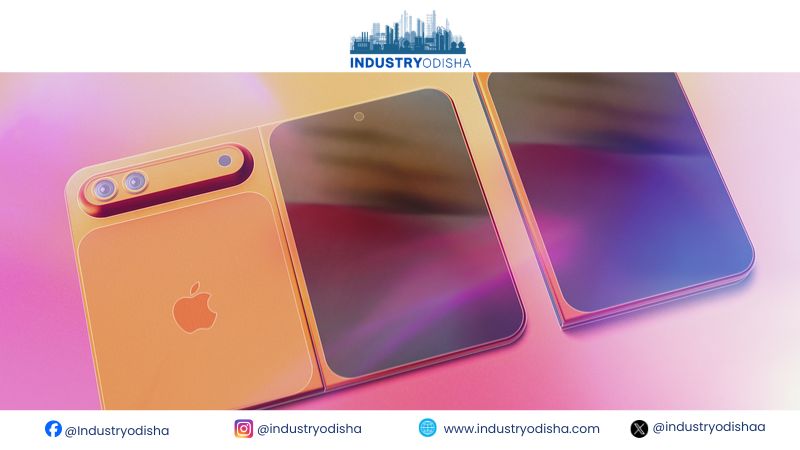
Industry Odisha Bureau, Sep 09: Apple is preparing to unveil its first foldable iPhone. The device follows nearly a decade of internal development. Pricing could exceed $2,000, testing Apple’s premium strategy. The launch marks Apple’s biggest iPhone design change yet.
Apple’s hardware teams studied foldable technology for years. That research predated Samsung’s first Galaxy Fold in 2019. Around 2020, Tim Cook returned energized from an Asia trip. He had seen consumers using foldable devices there widely.
Cook pushed Apple to accelerate its foldable development efforts. He became one of the project’s earliest internal champions. His involvement was notable given his usual operational focus. Throughout his tenure, Cook mainly focused on operations and finance.
Early concepts imagined a foldable iPad rather than iPhone. Cook’s enthusiasm helped redirect the project toward smartphones. Apple ultimately prioritized a foldable iPhone form factor.
Apple initially targeted a price near $1,999 internally. That figure aimed to stay just under $2,000. Apple used a similar strategy with the iPhone X. More recent discussions have considered pricing up to $2,199. Memory shortages reportedly pushed costs beyond earlier targets.
Larger-storage configurations could approach $3,000 at launch. That would sit well above Apple’s standard lineup. The standard iPhone currently starts at $799. The iPhone 17 Pro begins at $1,099.
Foldable phones remain a small slice of smartphones. IDC expects the category to grow 13% this year. Shipments could reach 22.9 million units globally. Total smartphone shipments exceed one billion units annually. The foldable smartphone segment is growing faster than rivals.
The foldable iPhone reportedly features two separate displays. An interior screen measures roughly 7.8 inches wide. An exterior display measures about 5.5 inches. The design favors video viewing and easier handling.
Engineering teams focused on reducing visible screen creases. Hinge reliability was another major technical priority. Apple developed a titanium-and-aluminum hinge for durability. Custom cover glass was created alongside partner Corning.
The foldable may prove less durable than standard iPhones. Camera performance and battery life could also lag behind. Users must unfold the device for full functionality. These trade-offs stem from the compact folding design.
Apple is also adapting software for wider displays. Many apps are being upgraded for the new format. iOS is being adjusted to support varied screen sizes.
Samsung popularized foldables with its original Galaxy Fold. Google briefly used a similar wide-screen design too. Samsung and Google’s latest foldables start near $1,899. Huawei also remains active in the foldable market. None of these competitors currently commands Apple’s brand loyalty.
Apple believes foldable technology is finally ready broadly. Wall Street estimates sales near 7 million to 10 million units. The real test lies beyond Apple’s most loyal buyers. Consumers must decide if the premium price is worth it. Full mainstream acceptance is not yet guaranteed.
