


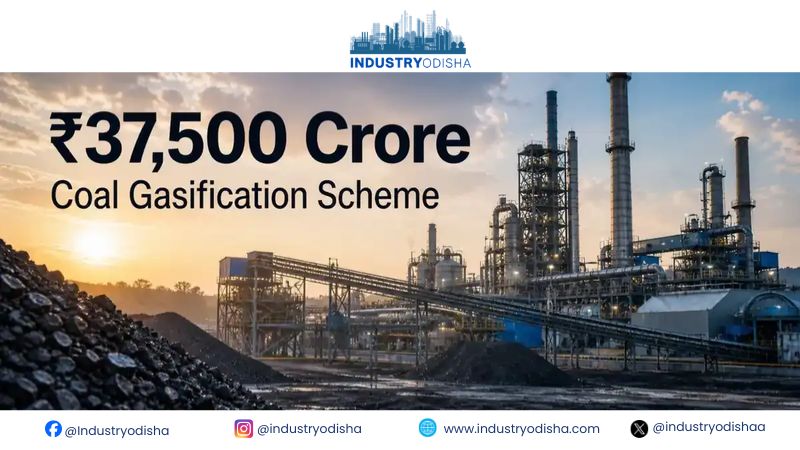
Industry Odisha Bureau, Sep 04: India’s ₹37,500-crore coal gasification incentive scheme has attracted no applications. The September 7 deadline is fast approaching. Neither private nor public-sector players have applied so far. This muted response raises questions about project viability. The Coal Ministry aims to gasify 75 million tonnes of coal and lignite. A query to the ministry went unanswered at filing time.
The scheme was cleared by the Union Cabinet earlier this year. It supports surface coal and lignite gasification projects nationwide. The Request for Proposal was dated July 7, 2026. Applications were meant to close by September 7. The absence of bids puts this timeline under scrutiny.
Coal gasification converts coal or lignite into synthetic gas. This syngas can be used as an alternative fuel. It also supports production of methanol and fertilisers. Hydrogen and various chemicals can also be derived. The process is presented as supporting cleaner energy production.
Energy security remains central to the scheme’s rationale. Officials hope to cut dependence on imported LNG and urea. Methanol and ammonia imports are also targeted for reduction. Domestic syngas production could reduce exposure to price swings. It may also help buffer global supply-chain disruptions. India’s import bill for such products was substantial in FY25. It stood at approximately ₹2.77 lakh crore that year. Products included LNG, urea, ammonium nitrate and coking coal. Ongoing tensions in West Asia have sharpened these concerns.
India’s coal reserves are among the world’s largest. They total roughly 401 billion tonnes nationally. Lignite reserves add a further 47 billion tonnes. Coal already supplies more than 55 percent of India’s energy mix. These reserves underpin the government’s continued push for gasification. Policymakers see untapped potential in converting reserves into syngas.
This incentive scheme builds on earlier gasification efforts. The National Coal Gasification Mission was launched back in 2021. A separate ₹8,500-crore scheme followed in January 2024. Eight projects worth ₹6,233 crore are currently under implementation. That track record shows some prior industry engagement existed.
The current silence from bidders is therefore notable. It may reflect challenges in structuring large gasification projects. Capital intensity and technological complexity could be factors. Commercial viability concerns may also be weighing on applicants. No specific reasons for the lack of bids are confirmed.
The gap between ambition and industry response is stark. The Coal Ministry has set a substantial gasification target. Yet its flagship incentive scheme has drawn no takers. Whether applications arrive before September 7 remains uncertain. The scheme’s ultimate success will hinge on industry participation.
