



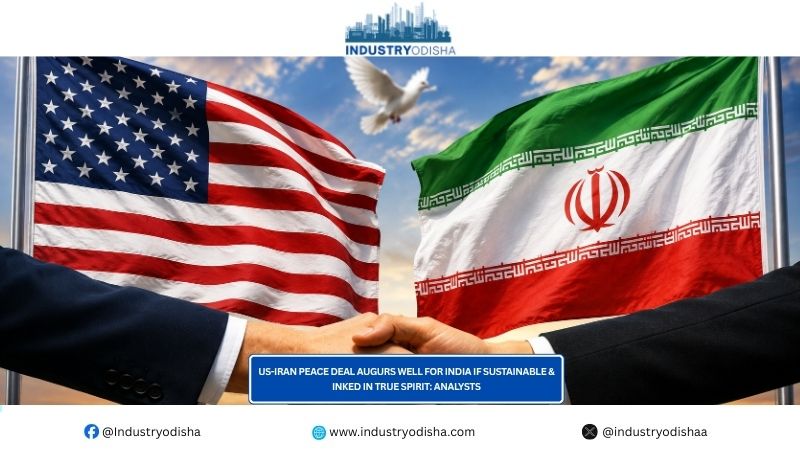
Industry Odisha Bureau, Jun 16: The much-awaited peace deal reportedly struck between belligerent USA and Iran on Sunday after over three months of tug of war, and the formal seal of approval reportedly scheduled to be stamped on June 19 this week in Switzerland’s Geneva, analysts view the significant development well and good for India as this South-Asian peninsula would not only learn a bitter lesson from its over-dependence on the West Asia region, but also heave a sigh of relief from the hurdles imposed on the imports of crude oil, LPG and LNG.
Reportedly, India sources “almost 90% of liquefied natural gas (LNG) supplies, around 70% of liquefied petroleum gas (LPG/domestic cooking gas) and about 50% of crude oil imports” from the West Asia region.
Since the conflict between US/Israel and Iran broke out on the wee hours of February 28 this year, Iran forcibly closed the globally strategic chokepoint Strait of Hormuz following which the supply chain through shipments went kaput and the US retaliated by imposing its naval blockade of Iranian ports absolutely disrupting the imports and exports business affairs.
In the wake of the peace deal being agreed upon after months-long hiccups, a ray of hope has now dawned on India as the Hormuz hurdle would get lifted as well as the US naval blockade, paving path for restoring the normalcy and resuming the supply chain shipments as usual, opine analysts.
Media reports stated that, “A tanker named Disha, managed by a consortium led by the Shipping Corporation of India, transited the Strait of Hormuz within hours of the peace deal announced and proceeded to the Gujarat port with a cargo of 62,370 metric tons of LNG from Qatar.”
Prior to the reported peace deal, “India had to bear the brunt of high hikes in crude oil and gas prices leading to further pressure of the Indian currency rupee, already on a depreciation mode, let alone the intensified inflation risks”, analysts explained.
Analysts are also reportedly optimistic that the peace deal between US and Iran might also allow India to purchase crude oil at a cheaper rate from Iran as used to be earlier, but had to stop in 2019 owing to US sanctions slapped by US President Donald Trump during his first stint then.
Analysts are also reportedly optimistic that the peace deal, if sustains and materialises in true spirit and rationality, India might continue with the development of Iran’s Chabahar Port which was also forcibly halted following the US sanctions. Notably, Iran’s Chabahar Port development by India is deemed to be pivotal for “India’s precious plans for the International North-South Transport Corridor”.
Now the whole world is agog and all eyes are on the tangible outcome of the peace deal agreement reportedly slated to be inked on June 19 in Switzerland’s Geneva with peaceful, prosperous and progressive provisions for a long term or else it would once again turn out to be a fiasco like the much-hyped Islamabad Talks, a fragile ceasefire unilaterally declared by the Trump regime resulting in much ado about nothing, remarked the analysts.
