



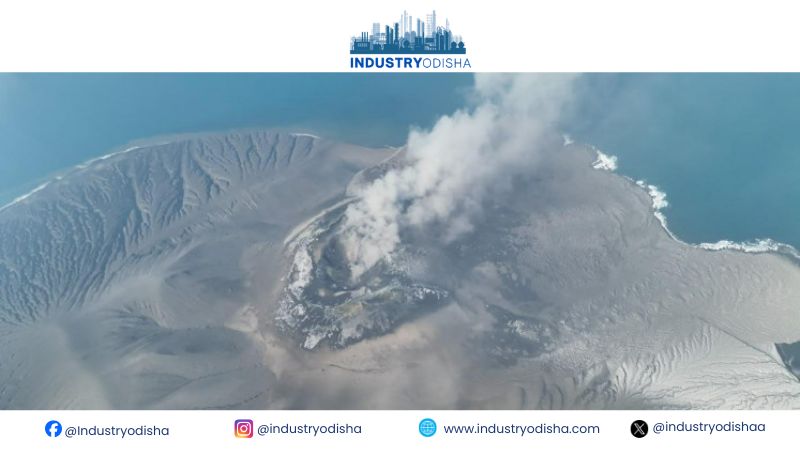
Industry Odisha Bureau, Sep 07: Anak Krakatau’s ash has paralysed parts of Indonesian aviation this week. Eight airports remained shut early Monday. Two of them serve greater Jakarta. Officials say 170,000 travellers have felt the fallout. More eruptions could still follow, regulators cautioned.
The volcano straddles the strait separating Java and Sumatra. It roared back to life late Friday. Since then, drifting ash has settled over Jakarta and nearby districts. That plume, not lava or tremors, is what grounded planes.
Scale matters here. The 170,000 figure counts affected passengers, not scrapped flights. No official tally of cancelled flights has been published. Disruption has rippled through several provinces beyond the capital alone.
Reopening dates remain fluid. Jakarta’s principal airport is slated to resume at 6 p.m. local time. Elsewhere, seven airports across Lampung and West Java stay grounded until roughly 9 a.m. Transport Minister Dudy Purwagandhi declined to promise a firm end date. “We cannot ascertain when this will end due to the dynamic weather,” he said Monday.
Behind that caution sits a fast-moving hazard. Indonesia’s volcano observatory recorded a fresh eruption Sunday night, at 8:23 p.m. A follow-up bulletin flagged a high chance of repeat activity soon. Nothing in that warning points to an imminent catastrophic blast.
Altitude data from BMKG shows how far the ash spread. Plumes climbed to 20,000 feet above Java. On the Sumatra flank, ash reached 50,000 feet. Banten province also registered fallout from the cloud.
Ash, unlike smoke, is abrasive and dense with silica. It can scour aircraft windows and choke jet engines. Visibility drops sharply wherever the cloud settles thickly. That combination is why regulators favour grounding planes over risking flights.
On the ground, health officials moved quickly too. Residents were told to mask up outdoors. Jakarta and Lampung schools pivoted to remote classes. The goal was shielding children from prolonged ash exposure.
Geology explains why Indonesia faces this recurring threat. The archipelago sits squarely on the Pacific “Ring of Fire.” Seismic and volcanic activity there is routine, not rare. That context alone, though, does not forecast any single eruption’s course.
Anak Krakatau’s very name, “child of Krakatau,” hints at its origin. It rose from the caldera left by Krakatau roughly a century ago. That earlier volcano, once spelled Krakatoa, exploded catastrophically in 1883. Tsunamis triggered by the blast killed over 36,000 people. Today’s activity is far smaller and remains a separate event entirely.
What comes next hinges on three moving parts. Volcanologists will track whether eruptions intensify or taper off. Meteorologists must watch how shifting winds steer the ash. Aviation regulators will weigh both before lifting any closures.
