



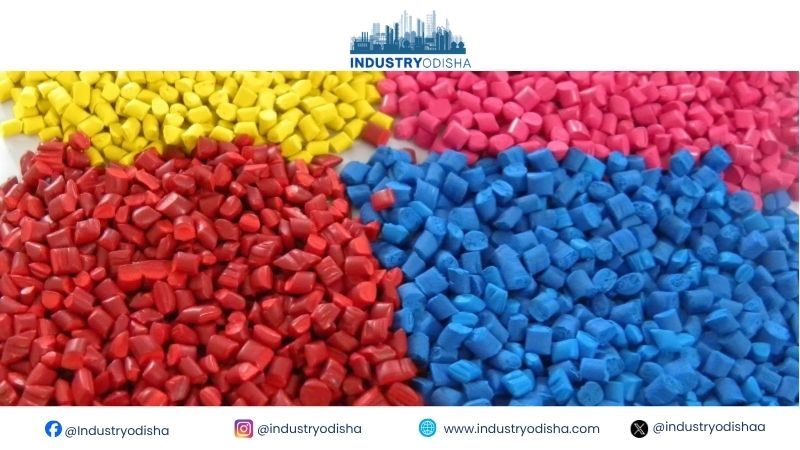
Industry Odisha Bureau, Oct 29: The rising price of polymers is hurting India’s small manufacturers. Higher shipping costs since late February have deepened the damage. MSMEs that turn polymers into finished products have seen margins halve, executives told Mint. Costlier crude oil has also strained their working capital.
The shock began with crude oil. Brent has climbed to about $114 a barrel from $72. That was its level when the West Asia war began on February 28. Crude feeds naphtha and other petrochemical inputs used to make polymers. Industry data reviewed by Mint show polymer prices rose 16-41% year-on-year in September. Pass-through, however, has varied sharply across products.
Polypropylene, used in packaging and household plastics, jumped 41% to ₹140 per kg. ABS, found in appliances, helmets and car interiors, rose 20% to ₹172. Polycarbonate, used in bottles and LED covers, gained 16% to ₹259. Import dependence magnifies the pain. India imports about a fifth of polypropylene demand and half its ABS needs. It relies on imports for almost all polycarbonate.
For many small firms, pricing power is limited. Kunal Jain of Noida-based ARK Polychem says margins fell from 20% to 10%. The ₹50-crore hose maker also supplies buyers in the US. Jain says large polymer producers set prices, leaving little room to adjust. His experience is one company’s example, not a sector-wide average.
Higher input prices lock up more cash in inventory. MSMEs often pay suppliers upfront but wait months for buyer payments. Economist Veeramani C. says this delayed cycle hurts small firms disproportionately. Industry bodies say September marked a turning point as cash buffers ran out. A Delhi-based polymer maker said raw material use fell from 1,000 to 650 tonnes. He blamed working-capital limits for the cut.
Freight costs form the second blow. The same producer said container rates rose to $4,500-4,800 from $800-1,000 in February. LogisticsWall’s Indian Container Freight Index, a weighted six-lane benchmark, rose 379%. It reached $7,114 per 40-foot container in October, from $1,484 in February. Higher freight raises landed input costs and makes exports less competitive. Some exporters also report war-related order cancellations.
The stakes are large. India has 97.4 million MSMEs, according to ministry data cited by Mint. They contribute nearly a third of output and half of exports. India SME Forum’s Vinod Kumar says MSMEs have exhausted their cash buffers. Federation of Indian MSMEs’ Anil Bhardwaj wants polymer trade barriers removed. That remains an industry demand, not government policy. The Centre’s ECLGS 5.0, announced in May, offers ₹2.5 trillion in guaranteed credit lines. Credit can ease liquidity but cannot lower input costs.
ISB Accelerator’s Chandan Chowdhury suggests cheaper working capital and export credit insurance. He also favours tools to manage raw-material price volatility. Over time, he sees diversified sourcing and stronger domestic supply chains as critical. Closer ties between large manufacturers and MSME suppliers would also help. Until costs ease, many small firms may keep cutting output.
