



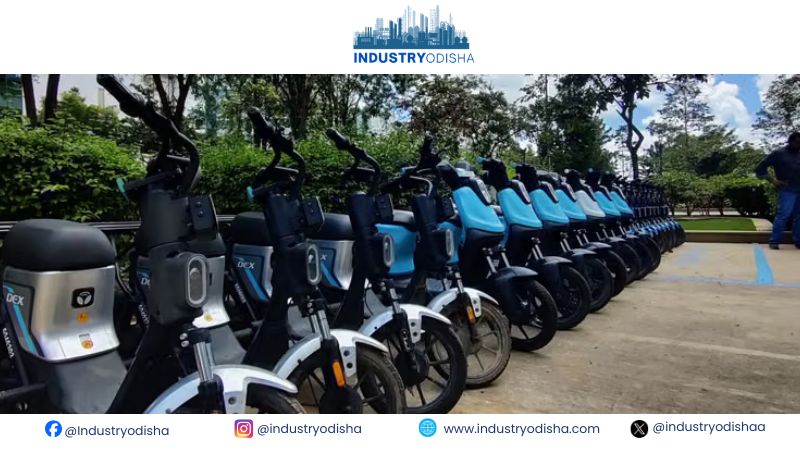
Industry Odisha Bureau, Sep 14: MoRTH’s draft rules would raise permitted motor power for low-speed EVs to 600W. The 25 kmph speed limit and registration exemption would stay unchanged. The electric two-wheeler industry is split over the plan.
India’s transport ministry has proposed changing low-speed electric vehicle rules. The draft would raise permitted motor power from 250W to 600W. It would also remove the existing 60 kg unladen-weight ceiling. The 25 kmph maximum speed limit would remain unchanged.
MoRTH Proposes Higher Power for Low-Speed EVs
The proposal appears in an August 21 draft notification. It concerns Rule 2(u) of the Central Motor Vehicles Rules. The current thirty-minute power threshold sits below 0.25 kW. The draft proposes raising that ceiling to below 0.6 kW. Maximum speed would still remain below 25 kmph.
Registration Exemption Remains
Qualifying vehicles would continue not being treated as motor vehicles. They would stay outside conventional registration requirements. They would also remain outside Vahan, the vehicle-registration database. This exemption structure remains central to the industry debate.
BGauss Sees Larger Low-Speed EV Market
Full-service OEMs view the changes as expanding their addressable market. BGauss founder Hemant Kabra expects more organised manufacturers to enter. He said BGauss already has low-speed products on the drawing board. Higher permitted power and no weight cap could ease vehicle design. Manufacturers see potential across personal mobility and last-mile delivery.
Yulu Warns About Removing Weight Limit
Yulu has objected to removing the 60 kg weight ceiling. A company official said weight was the only fixed physical limit. Motor power and speed settings, they argued, could be altered electronically later. Weight, by contrast, cannot be changed through software. Yulu warns heavier vehicles could still qualify under 600W and 25 kmph. Such vehicles could remain unregistered and outside Vahan. Yulu has sought either restoring the weight cap or other physical safeguards, such as seating or load-carrying limits.
Certification Rules Become Tighter
The proposed relaxation comes with stricter certification requirements. Vehicles would need suitable brakes and retro-reflective devices. They must meet safety requirements under Annex A of AIS-049. Compliance would be verified under AIS-041, through an authorised testing agency.
Low-Speed EV Market Could Expand
Industry estimates put FY26 low-speed EV sales at 2.3–2.6 lakh units. FY25 volumes were estimated at 1.8–2.1 lakh units. FY27 volumes could reach 3.2–3.6 lakh units, industry players project. That would imply growth of roughly 30–35%. These figures remain industry estimates, since exempt vehicles fall outside official Vahan data.
The debate also carries a regulatory history. MoRTH warned states in 2022 about vehicles reportedly capable of 40–55 kmph being sold as low-speed EVs. That episode underscores why exemption design still matters.
The draft now sits at the centre of a familiar trade-off: broader design freedom for manufacturers, against the risk that heavier, unregistered vehicles could slip through the exemption. How MoRTH resolves that tension remains open.
