



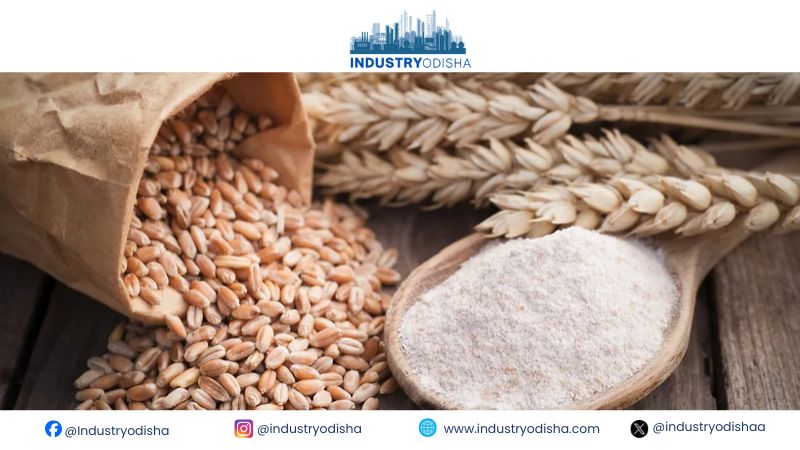
Industry Odisha Bureau, Aug 24: India has eased restrictions on specified wheat flour products to boost market liquidity. The Directorate General of Foreign Trade announced the policy shift on August 24, 2026. Wheat flour, semolina, and related products now fall under the ‘free’ export category. This marks a significant reversal of export controls imposed during a period of acute food-security concerns in the country.
The revised policy covers atta, maida, semolina, wholemeal atta and resultant atta specifically. These products have shifted from the ‘prohibited’ category to ‘free’ for export purposes. The change comes after years of tight export controls implemented for domestic food security. India imposed wheat export restrictions on May 13, 2022, following major supply concerns.
The Russia-Ukraine war disrupted global wheat supplies and increased international demand sharply. Domestic wheat prices came under significant pressure from surging worldwide demand for Indian wheat. In August 2022, the government extended export restrictions to wheat flour products specifically. The decision aimed to protect domestic availability and prevent inflationary pressures on consumers.
The government cited food security concerns for approximately 1.4 billion Indians as justification. Rising domestic prices threatened affordability and adequate supply for the Indian consumer population. Ensuring adequate grain stocks and stable prices remained central to the original policy. However, supply conditions have improved materially since the height of global wheat-market disruptions.
By February 2026, improved wheat stocks allowed the government to permit limited exports. The government approved exports of 25 lakh metric tonnes of wheat that month. An additional 5 lakh metric tonnes of wheat products were also allowed for export. This earlier decision reflected growing confidence in domestic supply adequacy moving forward.
The government stated that higher stock availability and softening prices enabled this policy shift. Expected higher production also provided greater confidence in maintaining adequate domestic grain supplies. The government aimed to prevent distress sales during peak harvest arrival periods in India. Improved market access can therefore reduce pressure on farmers during harvest time.
Increased export opportunities can improve market liquidity and support efficient stock rotation mechanisms. Greater market access through exports could potentially support farmers’ income during peak sales periods. The government explicitly stated that exports could strengthen farmers’ income while maintaining food security. This reflects an attempt to balance competing priorities between domestic needs and farmer welfare.
India’s latest policy reflects a careful balance between domestic food security and export objectives. The government continues prioritizing adequate domestic wheat supplies while permitting exports of specific flour products. Improved supply conditions now provide greater flexibility for exporters while safeguarding national food security. The revised approach suggests that India’s policymakers believe domestic availability has strengthened sufficiently to permit selective export opportunities.
