



Industry Odisha Bureau, Sep 09: India’s preparations for the BRICS Summit look notably restrained. The gathering takes place in New Delhi on September 12-13. That quietness contrasts sharply with India’s 2023 G20 campaign. World leaders including Xi Jinping are also expected.
New Delhi is managing several relationships at once. These include ties with Washington, Beijing and Moscow. Each relationship carries its own diplomatic sensitivities. None of these ties can be neglected easily.
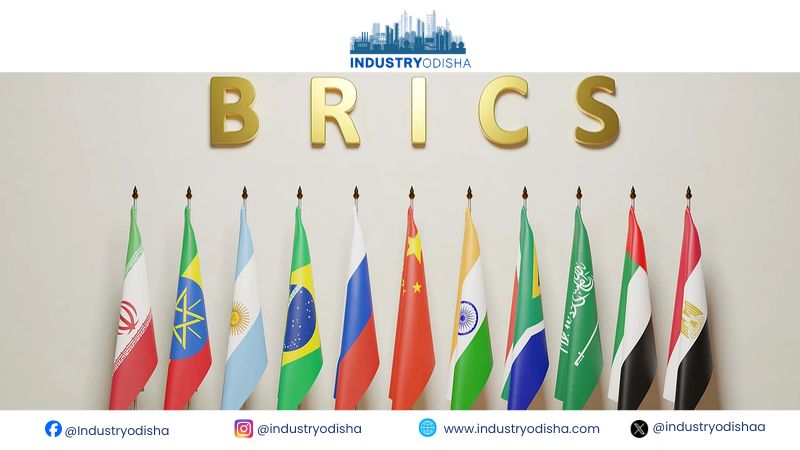
BRICS gives India a platform among emerging economies. It supports New Delhi’s push for a multipolar order. The bloc has grown from five to ten members. That expansion adds economic weight and political diversity. It can also complicate consensus among member states. The grouping also offers representation beyond Western-led institutions.
India’s 2023 G20 presidency involved extensive public promotion. Cities were decorated with murals, banners and statues. Cultural and youth programmes ran alongside official meetings. This year’s BRICS build-up looks considerably more modest. Officials note the two presidencies aren’t directly comparable. India’s G20 term was its first; BRICS hosting is not. Life-sized cut-outs and elaborate decorations marked that event.
The gap in public messaging is measurable. India’s foreign ministry issued 11 BRICS-tagged releases recently. That compares with 149 releases ahead of the G20. The contrast suggests a deliberately lower-key approach this time. Government speeches have also rarely mentioned the summit.
Quieter publicity does not mean less diplomatic activity. India says it has held around 350 BRICS meetings. These involved foreign ministers and national security advisers. Business leaders also took part in several sessions. A decade ago, India held 115 such events total. India adopted the theme of resilience and innovation this year.
Washington remains central to India’s economic calculations. The United States is India’s largest export market. President Donald Trump has criticised BRICS’s expanding influence. He reportedly views it as challenging American global standing. Analysts say a subdued summit avoids appearing confrontational toward Washington. Trade tensions marked India-US relations for part of last year. China’s economic weight gives it significant sway within BRICS. India must ensure the bloc doesn’t appear China-led. Border tensions between the two countries persist in the background.
Russian President Vladimir Putin is expected to attend. His presence adds further geopolitical weight to the summit.
India has long valued flexibility across competing blocs. Analysts describe this as a form of strategic autonomy. That approach lets India engage broadly without firm alignment. It avoids being seen as choosing one bloc over another.
India’s quieter BRICS presentation may reflect careful calibration. It does not necessarily signal reduced diplomatic commitment. The real story lies in balancing competing global relationships. Both dimensions matter for understanding India’s foreign policy.
