



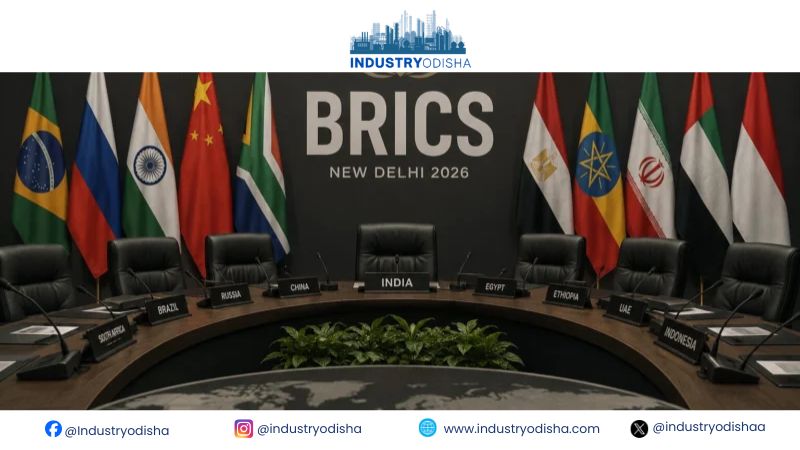
Industry Odisha Bureau, Sep 08: BRICS negotiators are racing to finalise a joint declaration. Consensus has proven difficult ahead of this weekend’s summit. Representatives from all eleven member nations gathered in Delhi. Their central challenge involves agreeing on sensitive geopolitical language.
The West Asia war sits at the centre of these talks. Palestine’s situation also requires carefully negotiated wording. Getting all members aligned hasn’t been straightforward this time. Earlier ministerial meetings actually failed to produce joint statements.
Those failures trace back to friction between Iran and UAE. Foreign ministers and trade ministers both hit similar roadblocks. Neither meeting could issue a unified position afterward. This history explains why Delhi negotiations carry extra weight now.
Diplomats have intensified efforts to prevent another breakdown. Sherpa-level talks spanned two full days this time. The goal remains crafting language acceptable to all sides. Success would mark meaningful progress after recent setbacks.
India has pushed hard for specific declaration priorities. Strengthening anti-terrorism commitments ranks high on its list. Reforming multilateral institutions is another key Indian demand. United Nations reform specifically features in these discussions.
These remain Indian proposals, not yet collective BRICS positions. Other members must still weigh in before finalisation. Negotiators are also drafting language around unilateral sanctions. That issue remains secondary to the West Asia discussions currently.
Beyond security matters, economic cooperation forms a major agenda pillar. Trade conducted in national currencies is under active discussion. This differs meaningfully from creating any shared BRICS currency. No such common currency proposal exists in current talks.
The New Development Bank will also feature prominently at Delhi. Members plan discussions around the bank’s future project pipeline. No specific financing commitments have been confirmed publicly yet. These conversations remain part of broader economic planning efforts.
This summit carries additional symbolic weight this year. It marks two decades since BRICS first formed. Organisers have framed proceedings around a people-centric approach. Energy security and startup ecosystems both feature prominently.
Innovation funding and MSME internationalisation round out economic priorities. Supply-chain resilience has become particularly urgent amid ongoing conflicts. Global disruptions have exposed vulnerabilities across international logistics networks recently.
Members are expected to adopt a new cooperation framework. This BRICS Logistics Supply-Chain Cooperation Framework targets several specific goals. Efficiency, sustainability and resilience across member transport networks matter most. Cross-sector logistics cooperation could strengthen collective economic resilience going forward.
What emerges from Delhi will test something larger. BRICS has grown considerably since its original four-nation founding. Eleven members now bring eleven distinct sets of interests. Finding consensus naturally becomes harder as membership expands further.
Whether negotiators bridge remaining gaps will shape summit outcomes. A successful declaration would demonstrate BRICS can manage internal differences. Failure would raise fresh questions about unity within an expanding bloc.
