



Industry Odisha Bureau, Oct 16: Indian creators are scaling into full media businesses, says YouTube India MD Gunjan Soni. She said YouTube’s ecosystem added over ₹18,000 crore to GDP in 2025. AI and global audiences could widen the opportunity.
Creators Become Media Businesses
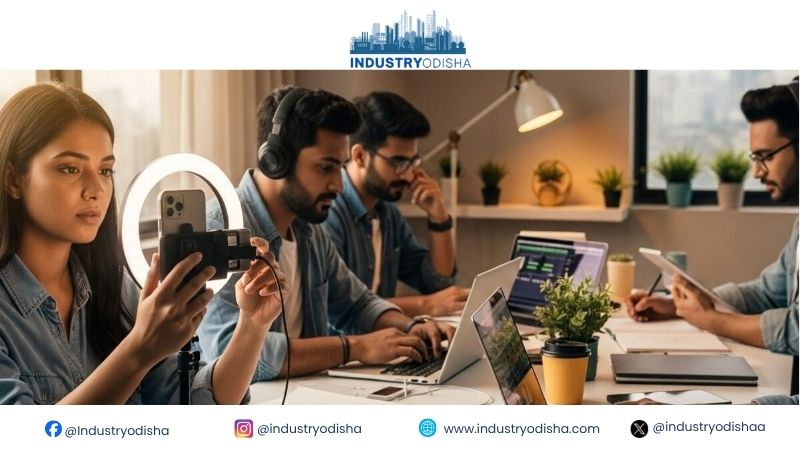
India’s creator economy is changing shape. Content creation is moving beyond lone hobbyists with a webcam. A growing number of creators now run organised production businesses.
YouTube India MD Gunjan Soni outlined this shift at the CII Big Picture Summit 2026. She said creators now work as directors, actors and producers rolled into one. Some, she added, are growing into heads of full media companies. Many are building advanced studios and managing large teams, Soni said. In her view, India’s creator economy is evolving into a media powerhouse.
Economic Contribution Gains Scale
Soni put numbers to that shift. YouTube’s creative ecosystem contributed over ₹18,000 crore to India’s GDP in 2025, she said. It also supported nearly one million full-time jobs. These figures cover the wider ecosystem, not YouTube’s own revenue or staff. Soni added that they reflect only the measurable economic impact.
Monetisation Opens New Doors
Commercial opportunities are also widening, according to Soni. About 200,000 Indian channels began monetising for the first time in the previous year. The number of creators earning seven-figure incomes rose by 20%. Monetising a channel, however, does not guarantee a profitable business. Earnings can also vary widely from one creator to another.
Regional Content Finds Global Audiences
Soni identified cultural exports as another major shift. Media companies, music labels and emerging artists are looking beyond India. They are turning regional stories and music into content with international appeal. She cited Marathi singer Sanju Rathore’s track Gulabi Sadi as an example. Indian music, she said, is reaching global audiences across formats and screens.
Fans Move Beyond Passive Viewing
Audience behaviour is changing too, especially in sports. Fans want stories about athletes, teams and moments behind the game. They also seek to take part in, and co-create, sporting culture. Soni called this wider engagement the “infinite stadium”. The term describes fan participation stretching beyond live match viewing.
AI Adds a New Layer
Artificial intelligence forms the next layer of change. Soni stressed that AI should support human creativity, not replace it. She cited a report by Public First and Google. It found AI tools gave Indian creative workers a 20% productivity boost. That equals roughly seven weeks of work a year, the report estimated.
The same research points to a potential ₹75,000 crore in additional GDP. It also suggests nearly 360,000 new creative jobs could follow. These are potential gains, not results already achieved.
Investment and Skills Take Centre Stage
Soni set out three priorities for building globally competitive media firms. First, back creator-led ventures with capital, infrastructure and supportive policy. Second, embrace AI as a core creative partner. Third, expand the global reach of Indian culture more aggressively.
She also urged greater investment in AI skills, multilingual capabilities and technology. These, she said, would help creators reach wider audiences and earn more. Soni highlighted the Indian Institute of Creative Technology (IICT) in nurturing future creative talent.
From Reach to Lasting Enterprise
India’s storytelling potential remains vast, Soni said. Unlocking it, she argued, needs closer alignment of policy, investment and technology. As the creator economy evolves, the next test is clear. Digital reach must now turn into sustainable, well-run media businesses.
