



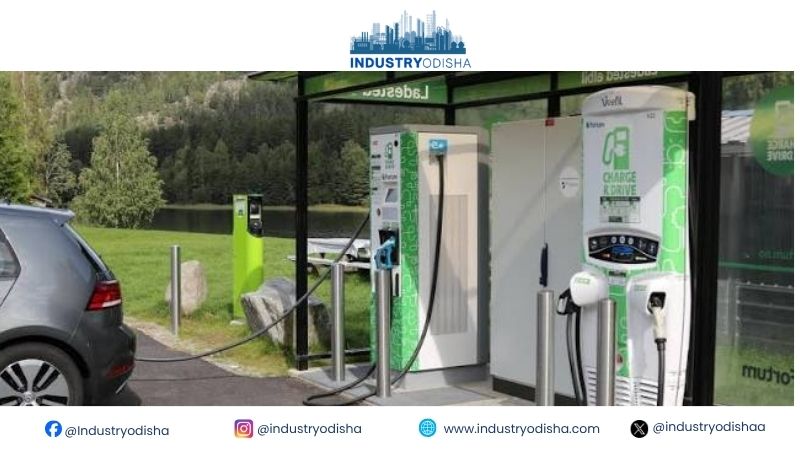
Industry Odisha Bureau, Oct 20: Finnish energy company Fortum has reportedly scrapped the sale of its Indian charging network, GLIDA. The move keeps it in India’s fast-growing but hard-to-monetise electric vehicle market.
Finnish energy utility Fortum Oyj has reportedly scrapped GLIDA’s sale to Gurugram-based JBM Group promoters. GLIDA is the company’s electric vehicle (EV) charging network in India. Instead, Fortum plans to run GLIDA’s 961 charging points on its own. Mint reported the decision, citing two people aware of the development.
Selling GLIDA would have completed Fortum’s exit from India, which it entered in 2012. The business was formerly called Fortum Charge & Drive India. London-based Opus Corporate Finance LLP ran the sale, code-named Butterfly. In December 2025, Mint reported that three suitors had signed non-disclosure agreements. They were Adani TotalEnergies E-mobility, Reliance BP Mobility and JBM Group. Fortum later entered an exclusivity pact with JBM.
Fortum India, Opus and JBM did not answer queries emailed on 18 October. A Fortum Oyj spokesperson said the listed company does not comment on market rumours.
The move comes as India’s electric vehicle market gathers pace. Vahan registration data show EV adoption rose from 4.71% in 2022 to 8.05% in 2025. It crossed 10% between January and October 2026. About 2.65 million EVs were sold up to 16 October this year. That compares with 2.35 million in full-year 2025 and 2.02 million in 2024.
India is also the world’s largest electric three-wheeler market. It ranks third in electric buses, per the International Energy Agency’s 2026 Global EV Outlook. Those rankings reflect 2025 performance. JBM Group led India’s e-bus sales in FY26, selling 1,260 vehicles. Its e-bus order book stood at ₹12,900 crore in September 2026. Much of that stems from public fleet orders under the PM e-Bus Sewa scheme.
Energy security adds urgency. India imports nearly 90% of its oil. Crude prices crossed $100 a barrel at times during this year’s US-Iran war.
India had 67,702 public charging options in October, including battery-swapping stations. The figure comes from Bharat Heavy Electricals Ltd (BHEL), which manages charger subsidies. Those subsidies fall under the ₹11,900 crore PM E-Drive scheme. Around 80 charge point operators (CPOs) now compete, including state-run oil marketers. Indian Oil, Hindustan Petroleum and Bharat Petroleum are among the largest.
Electric two-wheelers and cars are generally charged at home. Commercial vehicles such as three-wheelers, buses and trucks use public chargers. Some fleet operators secure cheaper power by guaranteeing CPOs steady charger use.
Profitability, however, remains elusive. “Globally, charging is not a standalone profitable business,” said Amit Bhatt. He is India managing director of the International Council on Clean Transportation. Bhatt said operators abroad report positive Ebitda near 20% EV penetration. Ebitda measures operating earnings before interest, tax, depreciation and amortisation. It does not guarantee net profit. Bundling chargers with cafés and food courts could lift utilisation, he added.
Fortum now stays in a market where demand is rising fast. The harder task is making charging pay.
