Industry Odisha Bureau, May 24: Despite being despised and looked down upon in our Indian society, researchers term the rag pickers or waste pickers with high esteem as the first and foremost filters in the recycling chain since they save our country from the rising volume of harmful methane emissions.
These rag pickers are found, especially, in the lanes and by lanes of urban areas meticulously sorting out and collecting the dumped and discarded household items or scraps in order to sell them to a ‘kabadiwalla’ (a local recycler) so that they could earn a meagre income for their survival.
Even though they are off the employment records or muster rolls of any urban local body (ULB), the rag pickers play a pivotal role in our public hygiene management and civic life despite being doing their daily duty religiously bearing the tag of informal and unorganized social servants.
Reportedly, the International Labour Organization (ILO) and the Chintan Environmental Research and Action Group (CERAG) are of the view that: “There are between 1.5 million and 4 million informal waste pickers in India. These numbers vary widely due to poor counting methods. Most of these workers are women from marginalized communities like Dalit, Adivasi, or Muslim backgrounds.”
According to the research done in collaboration with the United Nations Development Programme (UNDP) reports, “They often work without contracts, gloves, masks, or insurance, and many earn less than Rs 10,000 a month. Nevertheless, their contribution to India’s waste management is very significant and crucial.”
Based on ILO and CERAG data, “Informal waste pickers manage around 60 to 70 per cent of urban recyclable waste. An estimated 70 per cent of plastic recycling in India depends on this informal sector. Even the metro city-based municipal corporations save crores of rupees annually on collection and transportation costs due to the work of these informal workers, though they, ironically, do not receive formal payment from the state governments or the managements of the ULBs.”
Notably, “Methane is a potent greenhouse gas that significantly contributes to global warming, climate change, and air pollution, with far-reaching effects on ecosystems and human health. It is produced from the decomposition of organic waste in landfills and garbage bins and poses significant environmental challenges. Methane is generally considered worse than carbon dioxide in terms of its short-term impact on climate change, as it is significantly more effective at trapping heat in the atmosphere.”
Moreover, “Methane (CH₄) is approximately 28 to 36 times more effective at trapping heat in the atmosphere than carbon dioxide (CO₂) over a 100-year period. In the short term, particularly over 20 years, methane can be 84 times more potent than CO₂. This means that a ton of methane released into the atmosphere can cause much more warming than a ton of carbon dioxide in the near term.”
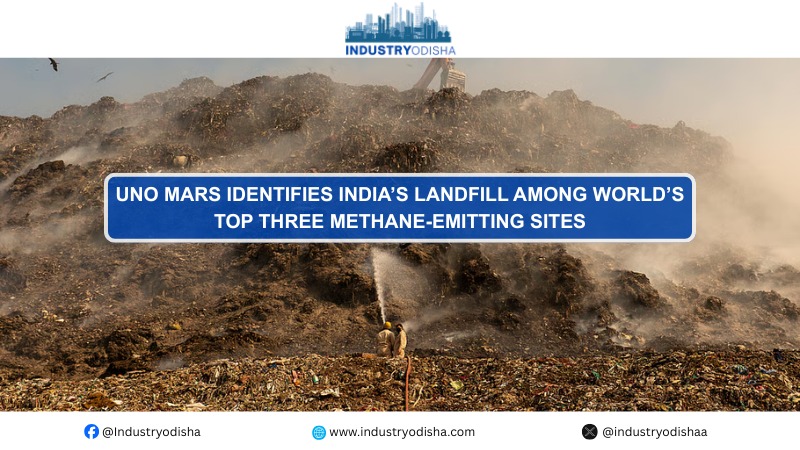
Read More: UNO MARS Identifies India’s Landfill Among World’s Top Three Methane-Emitting Sites