



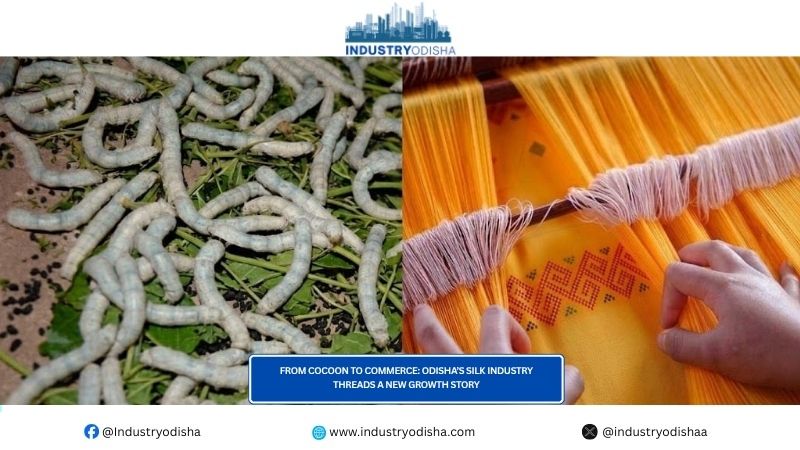
As part of its efforts to strengthen its sericulture industry, the government of Odisha has drawn up an ambitious plan to invest Rs 274 crore on the development of all four varieties of silk produced in the state.
The project, which will span the next five years, will also take steps to establish serisheds for cocoon rearing, along with introducing insurance coverage for sericulture farmers.
The decision to invest heavily in the silk sector comes at a crucial moment for India’s textile economy. India is the second-largest producer of silk in the world after China, accounting for nearly 40,000 metric tonnes of raw silk annually—about 20-25 per cent of global production.
More significantly, India is the only country that commercially produces all four varieties of natural silk—mulberry, tasar, eri and muga, giving it a unique competitive advantage in the global textile market. The country’s silk industry supports the livelihoods of over 97 lakh people, most of them small farmers, women and rural artisans, making it one of the most employment-intensive segments of the textile sector
Against this backdrop, the move by the state government marks far more than another agricultural initiative. It signals the state’s ambition to weave a new growth story around one of its oldest traditions.
Gifted with vast forest resources, favourable climatic conditions and a centuries-old weaving tradition, the state has the potential to emerge as a major silk hub in eastern India. By strengthening the entire value chain—from silkworm rearing and cocoon production to yarn processing and premium handloom products—Odisha can not only reduce its dependence on silk imports from other states but also contribute significantly to India’s ambition of becoming a global leader in sustainable and high-value textiles.
Here’s how Odisha can contribute and create a new growth engine for its rural economy and strengthen its textile ecosystem…
Opportunity to untap silk potential
Odisha possesses one of India’s richest traditions of silk weaving. Its handloom clusters produce exquisite Bomkai, Nuapatna, Khandua, Berhampuri and Sambalpuri silk sarees, which enjoy national and international recognition. The state is also naturally suited to produce tasar, mulberry and eri silk, thanks to its abundant forest resources and favourable climate.
Yet, despite this natural advantage, Odisha has remained largely dependent on silk yarn sourced from states such as Karnataka and West Bengal. This dependence increases production costs for weavers and exposes them to price fluctuations.
Greater investment in sericulture can bridge this gap by creating an integrated ecosystem where silk is produced, processed, dyed, woven and marketed within Odisha itself.
Strengthen the textile value chain
The textile industry is only as strong as its raw material base. A robust silk sector ensures uninterrupted supply of quality yarn, reducing production costs and improving competitiveness.
By increasing local cocoon production and establishing reeling and spinning units, Odisha can significantly reduce dependence on imports from other states. This backward integration would make the state’s weaving clusters more resilient while improving profitability for artisans.
More importantly, value addition within the state means greater income retention. Instead of exporting raw cocoons or purchasing expensive silk yarn, Odisha can capture value at every stage—from silkworm rearing to finished garments.
Generate employment
Equally significant is silk’s employment potential. Sericulture is one of the most labour-intensive rural industries, creating livelihoods from mulberry cultivation and silkworm rearing to reeling, weaving and garment making. It offers year-round income opportunities, particularly for small farmers, tribal communities and women, making growth more inclusive.
Boost Odisha’s handloom identity
Odisha’s handloom sector is celebrated for its intricate craftsmanship but often struggles with inconsistent raw material availability and rising input costs.
An expanded silk ecosystem would directly benefit traditional weaving clusters by ensuring affordable access to quality silk. The result would be higher production, better quality products and stronger branding for Odisha’s premium silk textiles in domestic and global markets. As global consumers increasingly seek handmade and sustainable products, Odisha’s silk heritage can become a powerful export brand.
At a time when global markets are seeking sustainable, handcrafted and ethically produced textiles, Odisha could position itself not merely as a producer of silk but as a creator of premium value-added textile products. If backed by sustained policy support, infrastructure development and market integration, the state’s silk mission could become the thread that weaves together economic growth, employment generation and cultural preservation.
