



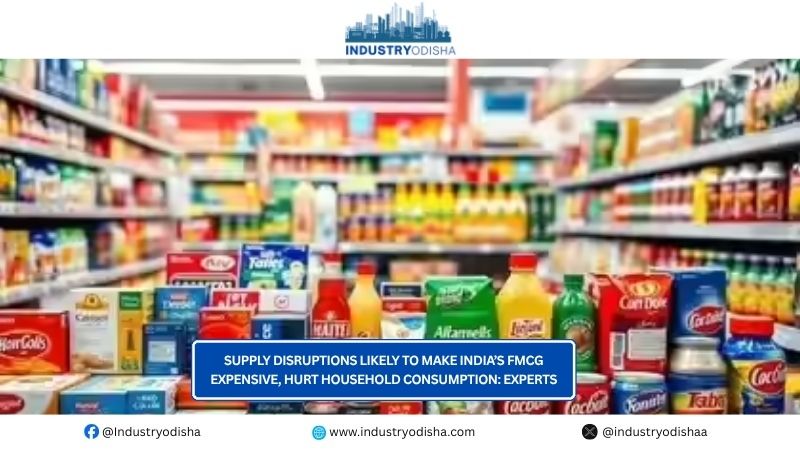
Industry Odisha Bureau, May 22: Since most of the companies in India are reportedly experiencing an exhaustion in their respective raw material buffers, market experts apprehend an expensive fast-moving consumer goods (FMCG) sector in near future that could hurt both household consumption and demand growth if the ongoing supply chain disruptions continue and the West Asia conflict remain unresolved.
The dark clouds of uncertainties reportedly hovering over the Indian industries and market are adversely affecting the “packaging materials, logistics, food ingredients and household products.”
Following such a grim scenario in the offing, experts reportedly diagnose that the Indian consumers would obviously opt for “cutting discretionary spending and reducing shopping frequency” that could further cast a gloom over the demand growth across the FMCG sector.
Elucidating, the experts reportedly contend that, buckled under the inflationary pressure, Indian consumers woulfood definitely put priority on “value for money” that would result in a trend of “leaning towards cheaper alternatives as well as smaller and affordable packs.”
Meanwhile, several companies dealing in FMCG have reportedly increased the prices of their respective consumer goods in a bid to absorb the shock thrust on them by the unresolved West Asia conflict.
As reported by market surveyors, the instances of snack foods, like biscuits, jams, chips, etc., and also hair oil are bearing the brunt of the supply chain disruptions and the crude-oil-linked inputs, packaging materials and transportation.
Besides, global crude oil volatility is soaring up the prices of plastics and polymers requisite for FMCG packaging. For instances, toothbrushes, household cleaners, cosmetics, shampoo bottles/sachets, and so on.
Reports said that, “India’s wholesale price index (WPI) inflation has already climbed to an estimated 42-month high of 8.3% in April this year.”
Market experts predict that the pricks and pangs have already started inflicting the urbanites, while the rural folk would very soon follow the suit in their local markets if the West Asia conflict continue to stay put further aggravating the supply chain disruptions, along with soaring up prices of crude oil staying adamant and refusing to budge persistently.
