



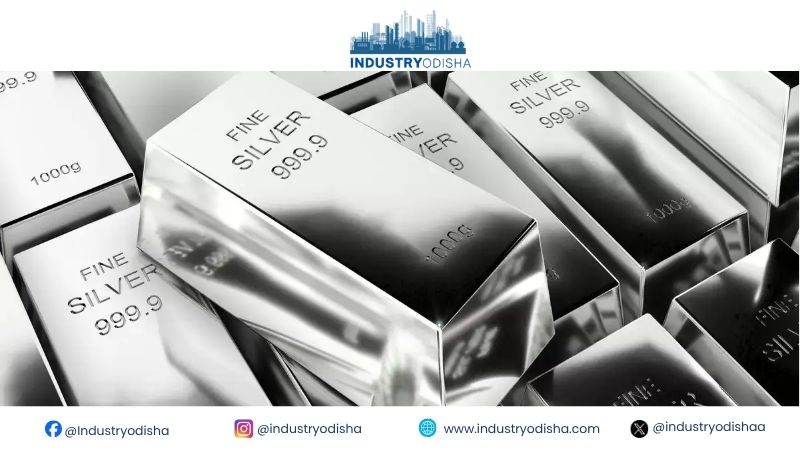
Industry Odisha Bureau, Oct 29: A silver import surge has revived India’s only international bullion exchange. The India International Bullion Exchange, (IIBX) recorded about 570 tonnes of silver trades. That volume came in roughly three months since August. The exchange had seen no silver trades in the preceding year. Spot gold imports through IIBX, by contrast, stood at just 0.3 tonnes.
The trigger was a regulatory shift in May. The Directorate General of Foreign Trade moved certain categories of silver to the restricted list. Importers of these products now need government licences. Kotak Neo’s Anindya Banerjee estimates licences covering about 400 tonnes were cleared by mid-August. That figure marks permitted import quantity, not metal already shipped. As licences flowed, many importers turned to IIBX for supply.
Duty changes shaped the move. The Centre raised silver import duty to 15% in May, Mint reported. However, the India-UAE trade pact allowed eligible importers lower duty rates. That gap created an incentive to route silver through the UAE. An industry official said licensing aimed to curb non-essential imports and support the rupee. It also sought to close the duty arbitrage, the official added. Licensing gives authorities tighter control over silver inflows.
Official trade data offer a wider view. India imported 1,017 tonnes of silver between April and September, Commerce Department data show. About 283 tonnes, or 27%, came through IIBX. That differs from the 570-tonne exchange figure, which runs over a longer period. Silver prices have meanwhile dropped 11.7% since August to ₹1.92 lakh per kg. India’s silver import bill hit a record $12 billion in FY26, Banerjee noted.
Allocation practices explain the shift to the exchange. Nominated banks have traditionally handled most bullion imports under limited quotas. Officials say banks often favour one large order over many small ones. Smaller jewellers can therefore miss out on scarce supply. The exchange model lets eligible buyers source metal directly. Hiren Chandaria of Monetary Metals says wider access could improve competition and pricing. Such cost benefits, however, are yet to be clearly demonstrated.
IIBX was originally built around gold. But a legal dispute over concessional gold quotas, starting early 2025, disrupted gold flows. Silver now looks like its second growth engine. IIBX chief Ashok Gautam hopes to exceed 2,000 tonnes of silver trades in FY27. He says that depends on DGFT issuing enough licences. The exchange handled about 1,127 tonnes in calendar 2024, according to Banerjee. That shows scale is possible, though calendar and fiscal figures differ.
Sustaining volumes is the harder test. Importers can still use banks and other permitted channels. One industry official suggests the DGFT require a fixed share of licensed imports via IIBX. That remains a proposal, not current policy. Mandated routing could boost liquidity but limit importers’ commercial choice. Lasting growth will likely depend on better pricing, access and efficiency. Otherwise, IIBX’s silver revival may fade if licensing conditions change.
