



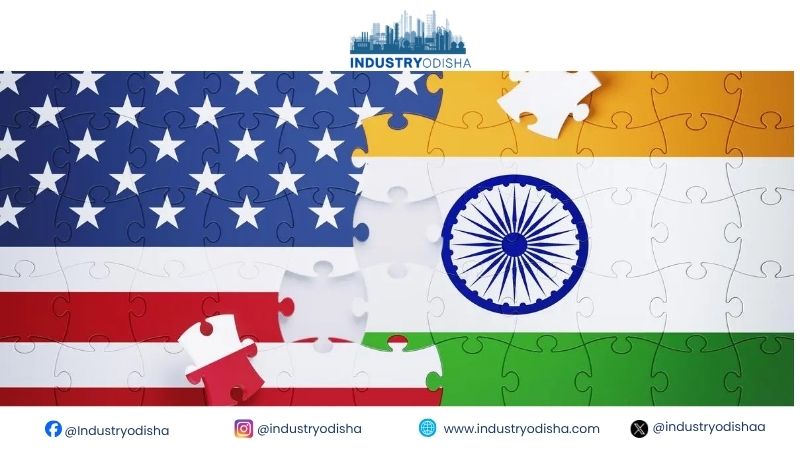
Industry Odisha Bureau, Oct 26: New Delhi reportedly rejects the 18% rate from February’s framework, citing today’s 10% levy. Farm concessions and political concern ahead of US mid-terms add further delay.
The India–US interim trade deal remains stuck, despite upbeat signals from Washington. US Secretary of State Marco Rubio has said 99% of the pact is complete. He suggested an announcement could come within weeks. Sources cited by BusinessLine, however, say serious gaps remain on tariffs and farm access. No signing date has been announced. The gap between optimism and agreement remains wide.
The core dispute concerns the tariff India’s exports would face. A framework announced on February 7 envisaged an 18% rate. Washington reportedly wants to keep that figure. The legal ground has shifted since then. The US Supreme Court struck down President Donald Trump’s sweeping reciprocal tariffs. Washington then imposed a temporary 10% duty on all partners from February 24. In July, the US Trade Representative (USTR) announced final measures under Section 301. That 1974 law lets the USTR act against trade practices deemed unfair. It was used extensively during the US–China trade war. India was placed in a lower tier, facing an additional 10% duty. BusinessLine links that duty to a probe over forced-labour concerns. Around 45% of India’s US-bound exports are exempt, the government says.
Hence India’s reluctance. An 18% commitment would leave exporters worse off than today. Even 12% or 14% would be unacceptable, a source told BusinessLine. The source also doubted Washington would go below 10%.
Agriculture adds a political layer. Washington wants wider access for American farm goods. The Trump administration hopes to showcase that access to voters in Republican-leaning states. Those concessions carry domestic sensitivities in India, where farming supports millions. Sources said signing just before the November 3 US mid-terms would be hard to defend. Accepting farm concessions alongside higher tariffs looks especially difficult. New Delhi is reportedly inclined to wait until after the polls. These are positions attributed to unnamed sources, not formal statements.
Exporters need predictable tariffs to price goods and sign long-term contracts. Uncertainty can delay orders and investment decisions. Tariff gaps with rival exporters can quickly shift buyers’ sourcing decisions. India is therefore seeking safeguards against fresh penalties. Possible risks include measures under Russia-related sanctions legislation. Another is a separate Section 301 investigation into excess industrial capacity. India wants any combined duties kept below those on Vietnam, Bangladesh and Indonesia. It also wants assurance that no new tariffs follow the signing. Washington has yet to respond satisfactorily, according to the source. India had sought such assurances on Section 301 as early as June.
The path forward depends on several moving parts. Clarity after the US mid-terms could reshape both sides’ calculations. A revised tariff offer, a farm-access compromise or firm assurances could help. Talks could resume in earnest once the electoral calendar clears. For now, the deal hinges on whether it improves on India’s current terms. Without that, signing offers New Delhi little commercial advantage.
