



Industry Odisha Bureau, Oct 11: Equinor’s first LNG cargo has reached Gujarat, starting a 15-year supply deal. Clean-energy cooperation is widening too. The India-EFTA trade pact is supporting wider business ties.
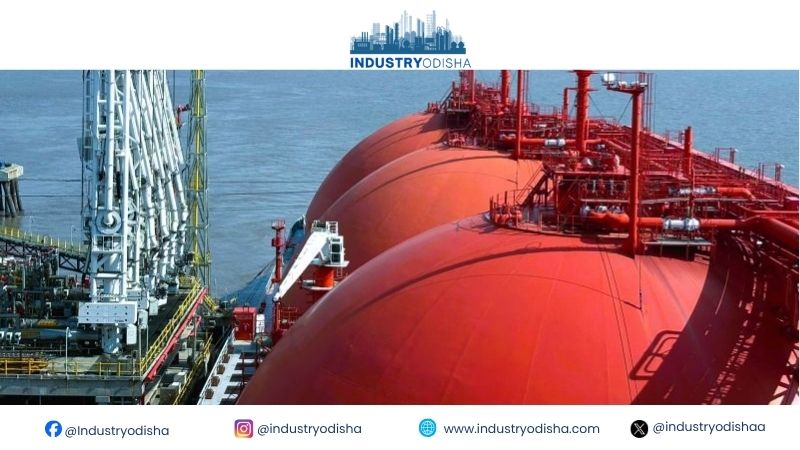
Norway has begun supplying liquefied natural gas (LNG) to India. Equinor’s first LNG delivery arrived in Gujarat earlier this year. It marked the start of a 15-year supply agreement. Astrid Bergmal is State Secretary at Norway’s Ministry of Foreign Affairs. She described the arrival as “an energy milestone”. She said the India-Norway energy partnership is broadening and becoming more future-oriented. Unlike plans still under discussion, the shipment is a completed commercial step. Volumes and contract value were not disclosed.
Beyond gas
Gas is only one part of the picture. Bergmal said cooperation now spans renewable energy, green hydrogen, offshore wind and green shipping. Norwegian companies, she said, bring technology, investment and specialised expertise. Such inputs could support India’s energy transition and climate ambitions.
Equinor itself is working with Indian partners on renewable energy and low-carbon solutions. The company thus straddles conventional gas and cleaner energy. LNG remains a fossil fuel, however. The clean-energy work is a separate track, with no project details disclosed.
Trade pact turns one
Bergmal’s visit coincided with the first anniversary of the India-EFTA TEPA. The Trade and Economic Partnership Agreement links India with the European Free Trade Association. Norway is EFTA’s second-biggest economy after Switzerland. The pact is separate from Equinor’s LNG arrangement.
Bergmal said it has improved predictability and business confidence. Market access matters because lower trade barriers can make goods more competitive. Business interest, she added, is turning into measurable commercial activity. “While it is still early days, we are already seeing tangible results in several sectors.”
Salmon leads seafood gains
Seafood offers a measurable example. The value of Norwegian seafood exports to India rose 24%. That covers October 2025 to August 2026, against the same period a year earlier. Salmon exports rose 143% over the same comparison. The seafood figure reflects export value, not shipment volume. Absolute export values were not provided. Bergmal credited better market access under the pact. “Improved market access under TEPA has played a vital role in this growth.”
A wider business footprint
Around 160 Norwegian companies already do business in India. Bergmal said TEPA has deepened this engagement by boosting predictability. Interest is spreading across several sectors, she said. These include renewable energy, maritime technology, and water and waste management. Digital solutions, manufacturing and health technology also feature. Their sector-wise investments and employment were not disclosed. Such interest does not yet equal signed contracts or operating projects. Still, it points to a wider commercial base than energy alone.
A broader relationship
Together, these developments show a relationship moving beyond conventional energy trade. For India, the deal adds a long-term gas supply from Norway. A long-term LNG contract provides a concrete anchor. Clean-energy cooperation and market access add newer layers. Much of that wider agenda remains at the stage of interest and exploration. How quickly it turns into investment will shape the India-Norway energy partnership’s next phase.
