



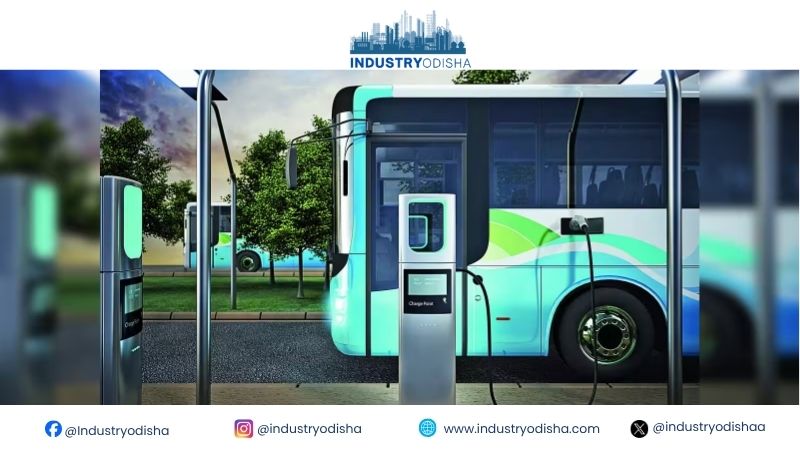
Industry Odisha Bureau, Sep 29: Wider bidding rules are drawing media, solar and software companies into subsidised e-bus tenders. Charging and depot work offers them an entry point. Delivering on long contracts is the harder test.
India’s electric bus push is no longer the preserve of vehicle makers and fleet specialists. Companies from media, solar and software are now appearing in government e-bus tenders. A Mint review of tender documents shows their growing participation. Executives and experts link the shift to wider bidding rules. Infrastructure firms can now bid if they partner with manufacturers or operators. Those partnerships can form during bidding or after buses are awarded.
A different operating model
Busmakers such as Tata Motors and Ashok Leyland do not bid directly. Fleet operators apply instead, then procure buses from manufacturers. Winning operators sign agreements with state transport agencies. Those agencies pay operators per kilometre for 10–12 years. New entrants can buy buses and run them themselves. Or an operator can manage the fleet while they build infrastructure.
Who is stepping in
Bhopal-based Bansal Telefilms, incorporated in 2019, produces and distributes television films. It belongs to the Bansal group, spanning media, construction, education and healthcare. A 6 April resolution added electric buses, charging stations and depots to its objects.
Jaipur-based Stockwell Solar, incorporated in 2017, works on solar and renewable-energy projects. Last month, it announced entry into EV charging and sought partners to scale. Agra-based Inventive Software Solutions dates back to 2006. It offers utilities technology services, energy analytics and EV-charging infrastructure.
Subsidies widen the field
The ₹11,900-crore PM E-Drive scheme covers 20–35% of an e-bus’s upfront manufacturing cost. An electric bus costs more than twice a diesel equivalent. The separate ₹20,000-crore PM-eBus Sewa scheme pays ₹24 per kilometre for urban fleets. Together, the programmes support rollouts across more than 100 major cities.
A growing market
India recorded 5,356 electric-bus sales in fiscal 2026, Vahan registration data shows. That was 37% higher than the previous year. Eka Mobility and PMI Electro Mobility won about two-thirds of over 17,000 CESL buses. Convergence Energy Services Ltd (CESL) placed those orders under PM E-Drive over the past year.
Amit Bhatt is India managing director at the International Council on Clean Transportation. Building buses and running them require different capabilities, he said. That distinction leaves room for specialist operators.
Entry is easier than execution
A May 2026 CESL document showed Bansal Telefilms in a 6,230-bus tender. That tender had been floated in January. The company has not won any orders yet. Some new entrants have also skipped recent tenders. Financing and partnerships remain open questions.
A senior busmaker executive said wider participation could make pricing harder to predict. Shyamasis Das of the Centre for Social and Economic Progress offered a parallel. Firms without sector experience also joined Battery Energy Storage System tenders, he said. Some of those awards were later cancelled after projects went undelivered.
Capability decides
India’s electric bus push is widening the pool of bidders. Running fleets for over a decade still demands capital, partners and expertise. The real test is whether new entrants can turn bids into buses on roads.
