



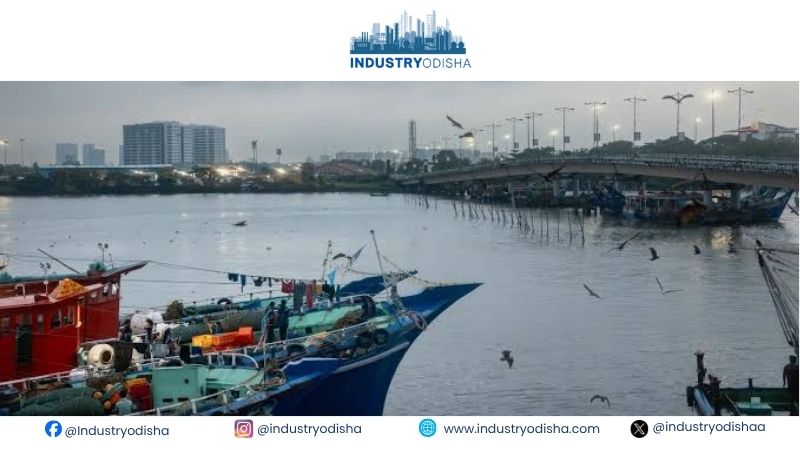
Industry Odisha Bureau, Sep 25: Sagarmala Finance Corporation plans to raise ₹1,000 crore through India’s first blue bond. The issue is small against Sagarmala’s needs. Its value lies in testing a new ocean finance channel for maritime infrastructure.
Maritime Finance Tests a New Channel
India’s maritime infrastructure is preparing to tap sustainable capital markets. Sagarmala Finance Corporation Ltd, or SMFCL, plans a ₹1,000-crore blue bond. Proceeds are intended for maritime projects.
The sum equals about 0.17% of identified Sagarmala project costs above ₹6 lakh crore. Size, however, is not the point. Infrastructure has long relied on bank loans, budgetary support and conventional bonds. This issue would add a new route.
How Blue Bond Finance Works
A blue bond works much like any conventional bond. Investors lend money and receive interest, with principal repaid at maturity. The difference lies in the use of proceeds.
Funds must go to clearly identified water-related or ocean-related projects. Issuers also need frameworks, impact measurement and periodic reporting. Such disclosure is meant to guard against bluewashing. SEBI already recognises blue bonds as sustainable finance instruments.
Sagarmala Provides the Pipeline
Sagarmala, part of the wider PM GatiShakti framework, launched in 2015. It spans about 845 projects with estimated investment of ₹6.06 lakh crore. Around 315 projects worth nearly ₹1.56 lakh crore are complete. The rest are under implementation or development.
Where the Capital Could Flow
Not every Sagarmala project will qualify. Eligible projects must show measurable ocean or water-related sustainability outcomes.
More than 200 projects cover coastal shipping and inland water transport. Ro-Ro and Ro-Pax ferries, inland terminals and cruise infrastructure could benefit. Port modernisation, worth nearly ₹2.9 lakh crore, is the largest segment. Electrified port operations, shore power and cleaner logistics are possible candidates. Fishing harbour upgrades and coastal livelihood schemes need smaller sums.
Longer Money for Longer Assets
SMFCL also has a balance-sheet reason. Its infrastructure loans run for around 12 years. Its existing borrowings carry shorter tenures.
A longer-duration bond could narrow that asset-liability mismatch. It could also diversify funding sources. Insurers, pension funds and global sustainability funds are potential buyers.
India Tests a Young Blue Bond Market
Globally, blue bonds have grown from a small base. World Bank data show cumulative issuance crossed $15 billion by mid-2025. It stood near $222 million in 2018. Seychelles issued the first sovereign blue bond that October.
India’s market remains far younger than its green bond segment. Vadodara Municipal Corporation is pursuing water-infrastructure issuance. No official forecast exists for India’s blue bond market.
Hurdles remain. There is no universal blue taxonomy. Valuing outcomes such as fish stock recovery is difficult. Buyers are mostly specialised impact investors. Harder global borrowing conditions could also affect issuance economics.
A Small Issue With Wider Stakes
At ₹1,000 crore, the bond barely touches Sagarmala’s funding needs. Its significance lies in testing whether ocean finance can support Indian infrastructure. The outcome will shape how far this channel develops.
