



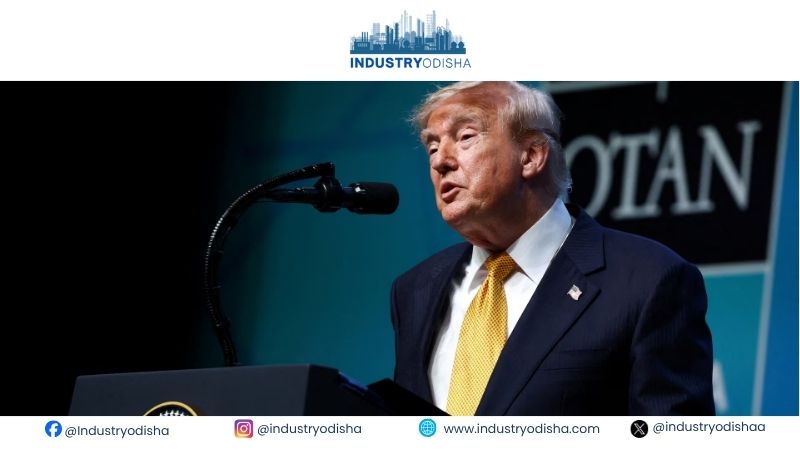
Industry Odisha Bureau, Sep 19: US President Donald Trump has signed a sweeping new sanctions Law. The legislation targets Russia, Iran, and major Russian energy buyers. The Law expands sanctioning powers covering trade, finance, and energy transactions. It also strengthens tariffs authority against countries purchasing Russian oil and gas. India and China now face greater trade uncertainty.
Trump Expands Sanctioning Powers
President Trump signed H.R. 5334 into Law on September 18. The measure is called the Sanctioning Russia and Iran Act. It expands statutory sanctions, tariffs, and restrictions targeting Russia. The Law also extends existing sanctions relating to Iran. Washington gains broader tools against Russian officials and financial institutions.
Energy Buyers Face Tariff Exposure
The legislation creates stronger tariff authority against Russian energy buyers. Countries purchasing Russian oil could face significant trade penalties. Russian gas purchases may also attract additional scrutiny. India and China are major economies exposed to these provisions. However, 100% duties are not automatically imposed immediately. The President retains important discretion over implementation and waivers.
India Faces Fresh Trade Risk
India could face significant tariff exposure under the new Law. The risk depends on future US implementation decisions. Indian exporters may therefore monitor Washington’s next steps closely. Any 100% duties could significantly affect bilateral trade economics. Higher tariffs would weaken competitiveness for several export-oriented sectors. That could complicate India’s broader trade strategy with the US.
China Also Under Spotlight
China is another major buyer of Russian energy. Its oil and gas purchases could attract similar US scrutiny. The Law increases pressure on major energy buyers supporting Russian exports. China’s larger trade exposure could make implementation economically significant. Global supply chains may also face secondary effects.
Russia Energy Trade Becomes Central
Russia remains heavily dependent on energy exports. Oil revenues remain important for Moscow’s external earnings. Gas exports also support Russia’s wider energy economy. The new Law targets this financial dependence indirectly. It pressures foreign energy buyers rather than Russia alone.
Iran Sanctions Also Extended
The legislation also extends existing sanctions authorities involving Iran. Washington has maintained restrictions covering Iranian energy and financial activities. The new Law preserves those powers for additional years. That gives President Trump broader geopolitical leverage. It also links Russia and Iran sanctions within one legislative framework.
100% Duties Raise Commercial Stakes
The possibility of 100% duties raises significant concerns for affected exporters. Such tariffs could make many shipments commercially unviable. Indian companies exposed to the US market could face higher uncertainty. China could confront similar pressure across manufacturing exports. Actual tariff levels will depend on presidential implementation. That distinction remains critical for businesses and investors.
Oil Strategy Becomes More Complex
India has historically relied on diversified crude sourcing. Russian oil has become important within that strategy. Any US pressure could force refiners to reassess procurement economics. Alternative supplies may carry higher costs. Shipping and insurance expenses could also rise. That makes energy security a key policy consideration.
Gas Markets Could Feel Spillover
The Law also covers purchases involving Russian gas. Global gas markets remain sensitive to geopolitical disruptions. Additional restrictions could redirect international supply flows. That may affect prices across Europe and Asia. India’s growing gas demand could face indirect consequences.
Tariffs Could Reshape Trade Calculations
The biggest uncertainty is implementation. The Law creates strong authority, but presidential discretion remains significant. Waivers could soften the impact for selected countries. Tariff rates may also differ across jurisdictions. Businesses will therefore watch Washington’s implementing decisions closely.
India, China Enter Higher-Risk Trade Environment
The new Law increases geopolitical risk for India and China. Both countries have substantial commercial exposure to global energy markets. Russian oil remains central to the policy debate. Russian gas adds another layer of complexity. US tariffs could alter procurement and export decisions.
Business Focus Shifts to Implementation
For markets, signing the Law is only the first step. The next question concerns President Trump’s tariff decisions. India will watch whether 100% duties are actually activated. China will face the same uncertainty. Russian energy buyers must now reassess commercial and geopolitical exposure. The Law therefore raises risks across trade, oil, gas, and global supply chains.
