



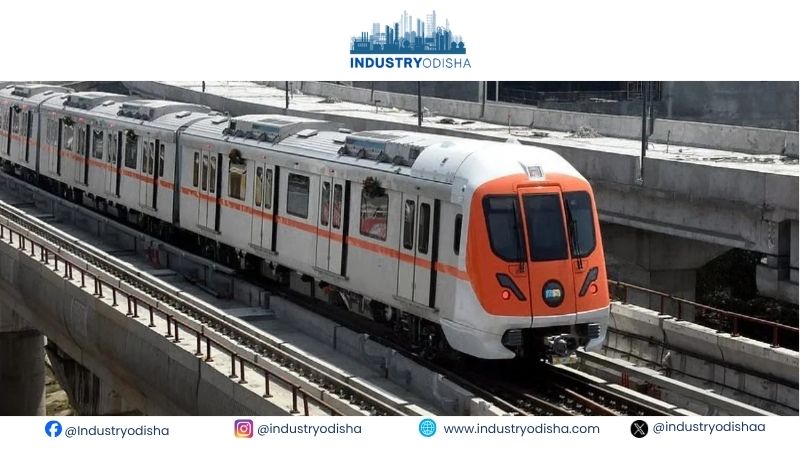
Industry Odisha Bureau, Sep 19: India’s metro network has expanded from a Single Kolkata line. The system now stretches across 26 cities nationwide. Operational metro length has crossed 1,155 kilometres. That leaves India only around 216 kilometres behind the US. The expansion marks one of India’s biggest urban infrastructure transformations.
From Single Kolkata Line to National Network
India’s metro journey began with a Single Kolkata line in 1984. For years, urban rail remained limited to a few major cities. Delhi Metro later transformed the country’s urban transport story. By 2014, metro services covered only five cities. The operational network then measured around 248 kilometres. Today, services operate across 26 cities.
Network Growth Accelerates
Metro construction has accelerated sharply during the past decade. Average commissioning increased from 0.68 kilometres monthly before 2014. The pace later climbed to nearly six kilometres monthly. This reflects stronger project execution and government investment. India’s network is therefore expanding much faster than before.
Ridership Rises With Expansion
Passenger volumes have increased alongside metro growth. Daily ridership stood near 28 lakh during 2013-14. It now exceeds 1.15 crore passengers. That shows metro systems becoming central to urban mobility. Larger networks also improve connectivity across employment centres.
Budget Support Expands
Government spending has risen substantially with metro construction. Annual budgetary support stood near ₹5,798 crore during 2013-14. It reached around ₹29,550 crore during 2025-26. That funding has supported expansion across several states. It has also helped Tier-II cities join the network.
Tier-II Cities Drive Next Phase
Metro growth is no longer limited to large metropolitan areas. Cities including Bhopal, Indore, Nagpur and Kanpur now have systems. Agra, Pune and Ahmedabad are also expanding. This broadens urban rail beyond traditional transport hubs. The next growth phase will increasingly involve smaller cities.
US Comparison Highlights Scale
India’s metro network is approaching the scale of the US system. The gap is now only around 216 kilometres. That comparison reflects India’s rapid infrastructure build out. However, network size alone does not determine transport efficiency. Ridership, integration and affordability remain equally important.
Construction Pipeline Remains Large
Around 791 kilometres of metro lines remain under construction. Projects are spread across 27 cities. Delhi, Bengaluru and Mumbai continue major expansion programmes. Chennai, Pune and Kochi are also adding corridors. The pipeline could push India ahead of current global benchmarks.
Network Integration Becomes Critical
The next challenge is connecting metro systems with other transport. Buses must integrate more effectively with stations. Suburban rail can also improve network utility. Last mile connectivity remains a major passenger concern. Better interchange can significantly increase ridership.
Financial Sustainability Gains Importance
Rapid expansion creates long term operating challenges. New systems need sufficient passenger demand. Affordable fares remain important for adoption. However, operating costs must also remain sustainable. Non fare revenue could become increasingly important.
India Enters Next Metro Phase
India has moved far beyond the Single Kolkata line. The metro network now extends across 26 cities. Its scale is approaching the US system. Hundreds of kilometres remain under construction. The next phase will focus on efficiency and integration. India’s metro story is shifting from rapid expansion to network optimisation.
