



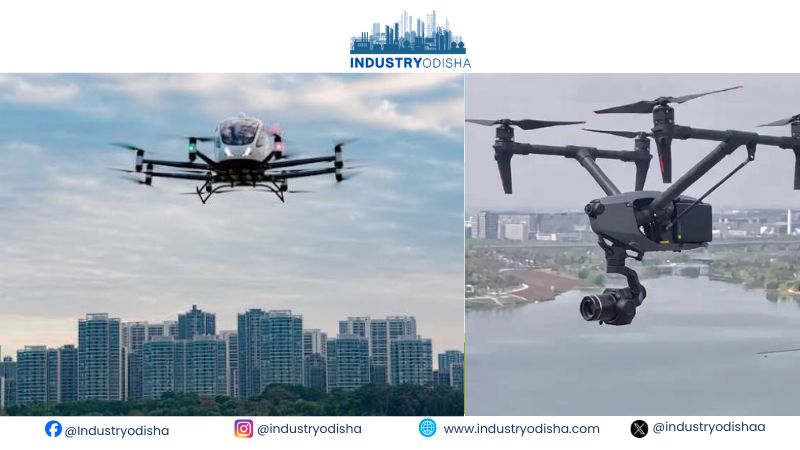
Industry Odisha Bureau, Sep 17: Share buybacks are familiar. Beijing has just launched a very different buyback altogether. This one targets a gadget millions of people once bought legally.
The Gadget In Question
The product is not shares but drones, tucked away in homes across China. Beijing has now made private drone ownership illegal citywide.
Owners of a 20 million strong city face a hard deadline of November 15, 2026. They can sell drones to the government, scrap them, or ship them out. Miss the deadline, and owners risk fines plus outright confiscation of their drones. Time, in this different buyback, is directly tied to payout value.
How The Payout Shrinks
Sellers acting by October 31 can get up to 3,000 yuan, roughly $450. After that date, the buyback price falls sharply to 1,500 yuan.
Those choosing to scrap their drones get 200 yuan before October 31. That drops to 100 yuan in the final stretch before November 15.
Why Beijing Acted
A June light aircraft crash into Beijing’s Citic Tower killed the pilot and injured others. Drones, not the aircraft, became the focus of the crackdown.
Restrictions had actually begun earlier, with sales bans and mandatory registration starting May 1. Authorities later reversed course, banning even registered drones entirely from November 15.
From that date, Beijing becomes fully controlled airspace for any drone activity. Nothing can be flown, carried, or stored anywhere within city limits.
A Precedent In Firearms, Not Gadgets
Buybacks of dangerous items aren’t new, though firearms remain the closest historical parallel. Australia’s post Port Arthur gun buyback collected roughly 650,000 weapons nationwide.
New Zealand and Britain ran similar firearm buybacks after mass-shooting tragedies in their countries. Britain’s programme alone saw over 160,000 handguns surrendered for compensation.
The underlying logic stays consistent
banning items millions of people already legally own. Paying owners often proves cheaper than enforcing door to door confiscation.
Could Other Cities Follow?
A full citywide gadget ban remains rare, costly, and politically difficult to replicate. Enforcing possession rules inside private homes adds further complexity for governments.
Yet drones today double as surveillance tools, not just recreational gadgets. That risk profile could push other city governments toward narrower, targeted buybacks.
Future versions may focus on high-risk drones near sensitive installations or cities. Beijing’s programme could be the first of its kind, not the last.
