



Industry Odisha Bureau, Sep 03: India’s ethanol programme faces mounting pressure from declining maize and sugarcane acreage. Policymakers are devising a more diversified feedstock strategy amid supply concerns now. Sustaining the 20% E20 blending mandate requires flexible allocation based on production. Rising sugar prices have prompted government consideration of protecting domestic sugar supplies.
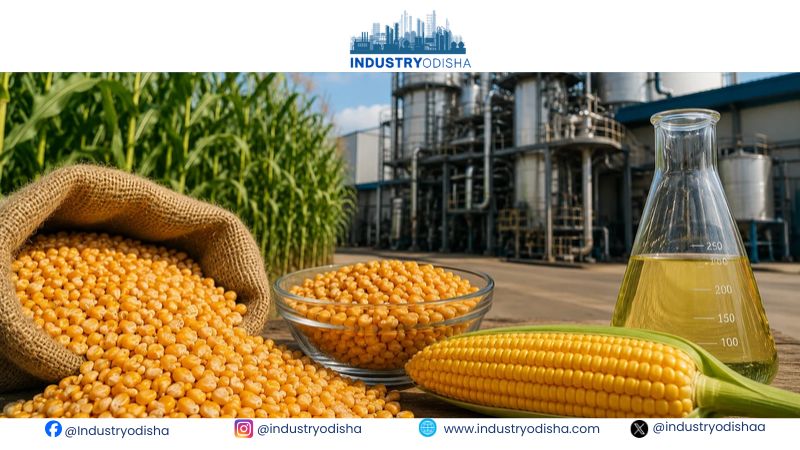
Maize acreage declined sharply to 8.99 million hectares from 9.38 million hectares. Sugarcane acreage fell to 5.84 million hectares, down 43,000 hectares year-on-year. These declines in both crops could tighten availability of major ethanol feedstocks considerably. Maize remains India’s largest single ethanol feedstock at 6.14 billion litres annually. However, maize serves competing food, livestock feed and industrial processing requirements simultaneously.
Average retail sugar prices reached 63.28 rupees per kilogram by late August. This represented a 37.5 percent surge from the same period last year. The government allowed one million tonnes of raw sugar imports to manage supply. Sugar dealer stockholding limits were halved to 2,000 quintals to prevent hoarding. Bulk consumers now face restrictions limiting stock holdings to fifteen days of consumption. These interventions reflect government effort to balance fuel production with food affordability.
Grain-based ethanol currently accounts for approximately 70 percent of India’s total feedstock mix. India’s rice stocks stood at 40.2 million tonnes as of August 1. This substantially exceeded the 13.5 million tonne official buffer stock norm significantly. The Food Corporation reduced broken-rice component from 25 percent to 10 percent. This change freed up approximately 10 million tonnes of rice supplies total. Of this, 5.5 million tonnes was reserved specifically for industrial use purposes. Surplus food grains contributed an estimated 2.33 billion litres to production mix.
The government is currently considering limiting sugarcane diversion to ethanol production purposes entirely. The objective would be to protect domestic sugar supplies amid rising prices. E20 blending remains the stated government mandate with no rollback discussion occurring. India’s ethanol production reached 11.98 billion litres in the 2025-26 supply year. This represented a notable increase from 10.40 billion litres in the prior year.
The emerging policy roadmap could focus on flexible feedstock allocation based on availability. Expanded grain-based distillery capacity could complement sugarcane and maize sources more effectively. Better coordination between food and energy ministries would improve supply-chain stability overall. India’s ethanol programme ultimately depends on balancing food security with fuel needs. Sustaining E20 blending while maintaining affordable sugar requires sophisticated policy frameworks ultimately.
