



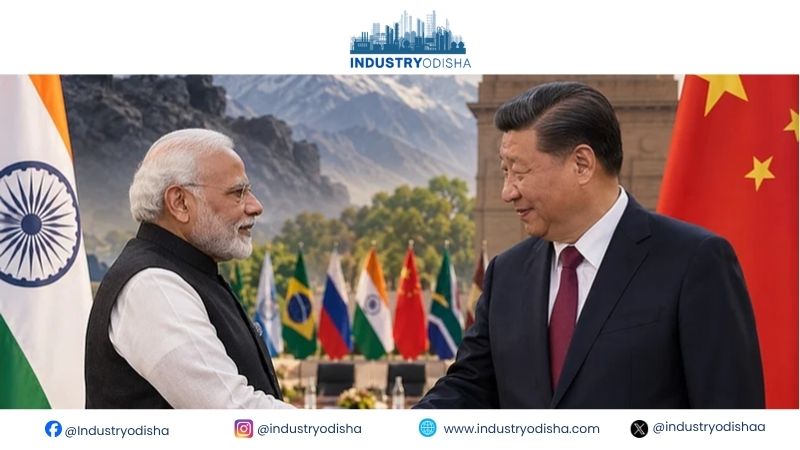
Industry Odisha Bureau, Sep 10: China’s Xi Jinping lands in New Delhi this week. It marks his first India trip in seven years. Diplomats see it as a positive signal. Business leaders are far less certain.
Xi joins the BRICS summit hosted by India. Whether he will meet Modi bilaterally remains unclear. That meeting could prove decisive for future ties. India-China relations have gradually warmed since last year. Modi’s China visit and a Kyrgyzstan meeting helped.
Despite this, commercial friction has not eased much. Chinese investment proposals still face slow Indian approvals. Visa processing remains inconsistent for business travellers. Equipment shipments from China keep hitting delays. Analysts describe a widening gap between politics and commerce.
India relaxed certain investment curbs back in March. Electronics, capital goods and solar cells benefited most. Officials are also weighing quicker joint-venture clearances. This reflects targeted easing, not a full reopening.
Approvals have started trickling through selectively. Dixon Technologies and Vivo Mobile secured one such venture. It shows movement, though hardly a broader shift.
Caution still defines decisions at larger Chinese firms. Both BYD and Great Wall Motor paused India plans. Increased regulatory scrutiny reportedly drove those decisions. Neither automaker offered public comment on the matter.
China has tightened its own investment oversight too. Deals involving advanced manufacturing draw closer Beijing review. Officials there frame the relationship in cooperative terms. India and China, they argue, complement rather than threaten each other.
Sensitive sectors remain particularly difficult to navigate. Alipay’s bid to link with India’s payments network failed. National security concerns were cited behind that decision. Xiaomi separately faces scrutiny tied to an SFIO recommendation. The company denies wrongdoing and says regulators haven’t contacted it.
Equipment flows have proven equally troublesome this year. Chinese authorities reportedly limited exports of select technology. Port machinery, solar panels and mobile equipment were affected. Meanwhile, Chinese customs has delayed India-bound shipments too. Large boring machines for infrastructure sat stalled over a year.
Flight connectivity improved after resuming last year. Visa rules for Chinese professionals were also simplified. Yet Indian businesspeople still report visa complications lately.
Ajay Srivastava of the Global Trade Research Initiative flagged this pattern. He called it more than routine bureaucratic delay. He linked it to India’s broader trade dependence.
Former trade official Anup Wadhawan struck a more optimistic note. Leadership-level talks, he said, can align divergent interests. Real commercial progress, though, depends on deeper economic alignment.
A Xi-Modi meeting alone won’t resolve these barriers. Genuine business normalisation likely needs more sustained effort. Investment scrutiny, technology curbs and logistics hurdles persist regardless.
