



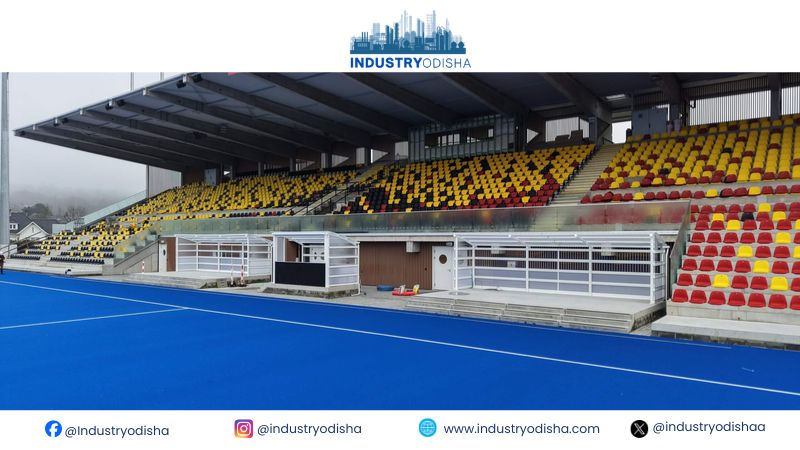
Industry Odisha Bureau, Aug 11: The International Hockey Federation’s overhaul of the Hockey World Cup format eliminates the quarterfinal stage, fundamentally transforming how international hockey competition plays out at pool level. India’s hockey teams now face compressed pathways with zero margin for error: the men competing in Pool D alongside England, Pakistan and Wales; the women against China, England and South Africa. Unlike previous hockey editions offering second-chance knockouts, this revised hockey world cup format moves directly from four pools of four to a second-stage group phase where only the top two advance, eliminating the recovery opportunities that previously defined tournament strategy.
Head-to-head results between pool rivals now carry forward into the second stage, doubling their strategic weight. India men’s coach Craig Fulton emphasizes that early victories matter disproportionately, particularly against direct qualifiers those points persist into the next round, creating a cascading advantage. Women’s coach Sjoerd Marijne prefers the traditional quarterfinal, arguing that higher-ranked teams benefit from removing underdog reset opportunities.
The architectural change concentrates early momentum at a premium. Both Indian squads must prioritize consistency from opening matches, sacrificing tactical flexibility previous formats permitted. By compressing the tournament and eliminating the quarterfinal reset, the new structure penalizes early missteps severely. Every pool result becomes progressively consequential, making first-round form potentially determinative of which teams sustain intensity through knockout rounds and semifinal qualification.
