



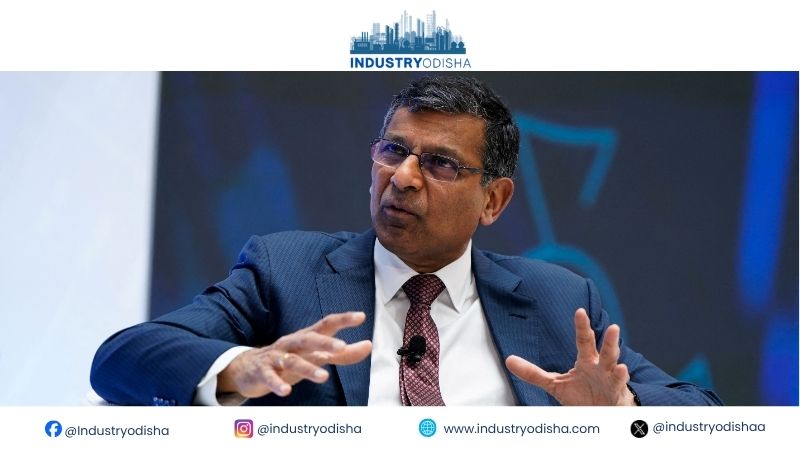
Industry Odisha Bureau, Oct 27: India should not deplete its reserves to defend one rupee level, Raghuram Rajan warns.
Former RBI chief Raghuram Rajan has urged India to stop chasing a fixed rupee level. Speaking to the Reuters Global Markets Forum on Tuesday, he offered simple advice: don’t panic. He argued that spending reserves to defend one number wastes hard-won buffers. Some depreciation, he added, could even help Indian exporters.
The rupee has lost about 6% so far in 2026, Reuters reported. That makes it Asia’s second-worst performing currency this year. It also touched a record low of 96.96 against the dollar in May.
The pressure comes largely from abroad. Crude oil prices remain high, raising India’s import bill. Rising US Treasury yields are pulling global money towards American assets. Foreign investors keep selling Indian shares. Each outflow reduces demand for rupees and pushes the currency lower.
These forces have pushed the Reserve Bank of India to step up intervention. A central bank intervenes by selling dollars to slow a currency’s fall. Smoothing disorderly swings is a legitimate tool for protecting financial stability. Defending a predetermined level is different. If pressures persist, reserves can drain without changing the trend. That second path is what Rajan cautions against.
India raised over $140 billion through special measures earlier this year, Reuters reported. About half has been used to support the rupee and absorb surplus banking liquidity. That does not necessarily mean an equal fall in official reserves. Rajan pointed to the effort to attract FCNR(B), or Foreign Currency Non-Resident (Bank), deposits. These are foreign-currency deposits that Indian banks accept from non-resident Indians. He said it would be a pity to spend such inflows quickly defending a level. India, he noted, has historically avoided that approach.
A weaker rupee carries a trade-off. It makes Indian goods cheaper abroad and can steady export earnings. But exporters relying on imported inputs face higher costs that erode the benefit. Depreciation also raises the rupee cost of oil and other imports. That can feed inflation and squeeze firms with unhedged dollar debt.
Rajan warned the current account deficit could widen if oil stays expensive. A wider gap means India relies more on foreign capital to pay its bills. RBI Governor Sanjay Malhotra earlier this month kept monetary policy steps on the table. No decision has been announced yet.
Geopolitics adds another risk. Rajan said oil-importing emerging markets would suffer if the Middle East war reignites. Damage to Gulf energy infrastructure would make the blow far heavier. Such a shock would hit India’s oil bill, inflation and currency together. That possibility is exactly why reserves deserve protection.
Rajan knows currency stress well. He took charge of the RBI in 2013 during a rupee crisis. India was then grouped among the “fragile five” vulnerable emerging economies. Today’s conditions differ, but the lesson about buffers still holds. Policymakers must calm disorderly swings without spending the reserves needed for future shocks.
